
Bombadier Beetle
Brachinus crepitans
Photo: Wikimedia Commons (CC) via https://en.wikipedia.org/wiki/Brachinus_crepitans
Overview
Brachinus crepitans is a species of ground beetle in the Brachininae subfamily that can be found in Europe, central and west Asia, and northern Africa.
The Bombardier Beetle faces severe population declines due to habitat destruction from agricultural intensification and urban development across its European range. Pesticide use in agricultural areas has significantly reduced prey availability and directly impacts beetle survival, while climate change is altering the moisture and temperature conditions essential for their ground-dwelling lifestyle.
Habitat
Inhabits moist soil environments including riverbanks, wetland margins, agricultural field edges, and areas under stones or logs in temperate European ecosystems. Requires loose, well-drained soils with adequate moisture and abundant ground-dwelling invertebrate prey.
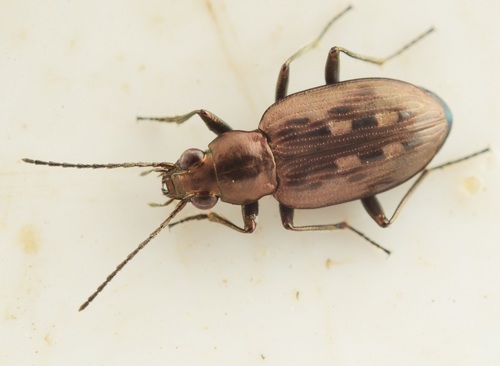
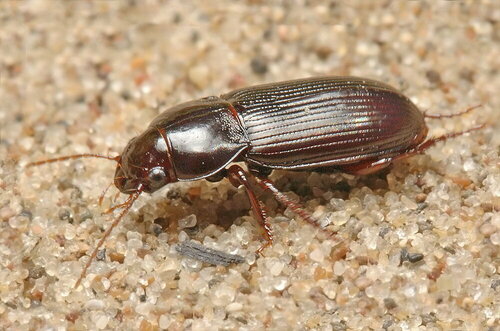
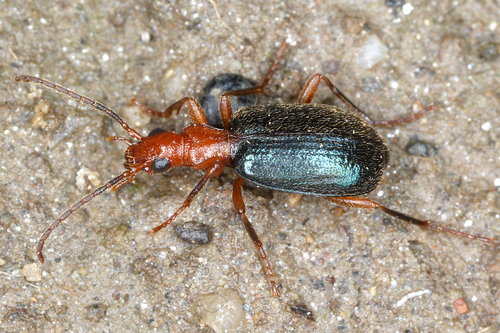
Other threatened species in Carabidae

Frequently asked questions
Why is Bombadier Beetle classified as Critically Endangered?
Where does Bombadier Beetle live?
What are the main threats to Bombadier Beetle?
Get weekly conservation intelligence
One short digest a week of the most striking species and country data we ship, plus breaking conservation news paired with our database where it matters.
Free, no spam. One-click unsubscribe in every email.