
Bog Turtle
Glyptemys muhlenbergii
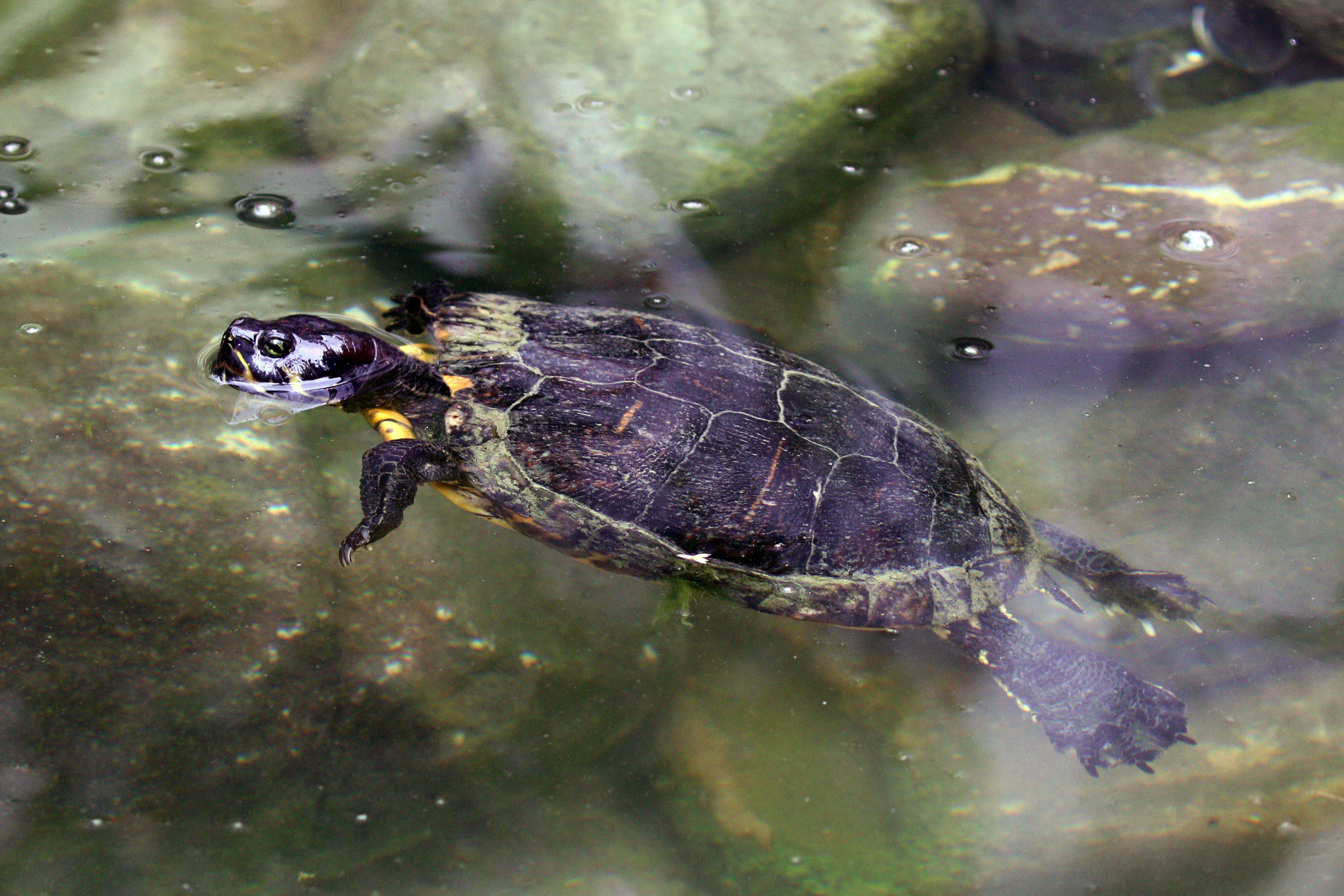
Photo: Photo: Wikimedia Commons, CC BY-SA
Overview
The bog turtle, also known commonly as Muhlenberg's turtle, is a critically endangered species of semiaquatic turtle in the family Emydidae. The species is native to the eastern United States. It was first scientifically described in 1801 after an 18th-century survey of Pennsylvania.
The smallest North American turtle, it measures about 10 centimeters (4 in) in straight carapace length when fully grown. Although the bog turtle is similar in appearance to the painted turtle and the spotted turtle, its closest relative is actually the somewhat larger wood turtle. The bog turtle can be found from Vermont in the north, south to Georgia, and west to Pennsylvania.
Diurnal and secretive, it spends most of its time buried in mud and – during the winter months – in hibernation. The bog turtle is omnivorous, feeding mainly on small invertebrates. The bog turtle is the state reptile of New Jersey.
The bog turtle faces severe population decline primarily due to wetland habitat destruction and degradation from agricultural conversion, urban development, and altered hydrology. Illegal collection for the pet trade has historically decimated populations, while invasive plant species and sedimentation from surrounding land use changes continue to degrade remaining bog and fen habitats. Climate change poses an additional threat by altering precipitation patterns and temperature regimes critical for maintaining the specialized wetland conditions this species requires.
Habitat
Bog turtles inhabit small, shallow wetlands including sphagnum bogs, sedge meadows, fens, and marshy areas with soft substrates and emergent vegetation. These specialized habitats require specific hydrological conditions with slow-moving or standing water, open canopy areas for basking, and adjacent upland areas for nesting.
Conservation measures underway
Other threatened species in EMYDIDAE
Frequently asked questions
Why is Bog Turtle classified as Critically Endangered?
Where does Bog Turtle live?
What are the main threats to Bog Turtle?
Get weekly conservation intelligence
One short digest a week of the most striking species and country data we ship, plus breaking conservation news paired with our database where it matters.
Free, no spam. One-click unsubscribe in every email.