
Bog-moss Flapwort
Odontoschisma sphagni
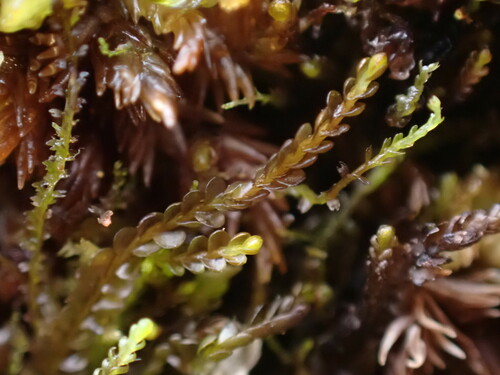
Photo: Wikimedia Commons (CC) via https://en.wikipedia.org/wiki/Odontoschisma_sphagni
Overview
Odontoschisma sphagni, commonly known as bog-moss flapwort, is a species of liverwort in the family Cephaloziaceae. It grows in raised bogs on moist, peaty soil, on rotten and dead wood or on thin soil covering moist sandstone rock in evergreen or deciduous forests. It sometimes grows among mosses.
Bog-moss Flapwort faces significant threats from habitat degradation and loss of specialized bog ecosystems. Climate change and human disturbance to peatlands are reducing the availability of suitable acidic, waterlogged conditions this species requires for survival.
Habitat
Acidic bogs, peatlands, and wet heathlands with Sphagnum moss communities, typically in nutrient-poor, waterlogged conditions. Often found growing directly on or among Sphagnum moss in oligotrophic wetland environments.
Other threatened species in Cephaloziaceae
Frequently asked questions
Why is Bog-moss Flapwort classified as Vulnerable?
Where does Bog-moss Flapwort live?
What are the main threats to Bog-moss Flapwort?
Get weekly conservation intelligence
One short digest a week of the most striking species and country data we ship, plus breaking conservation news paired with our database where it matters.
Free, no spam. One-click unsubscribe in every email.