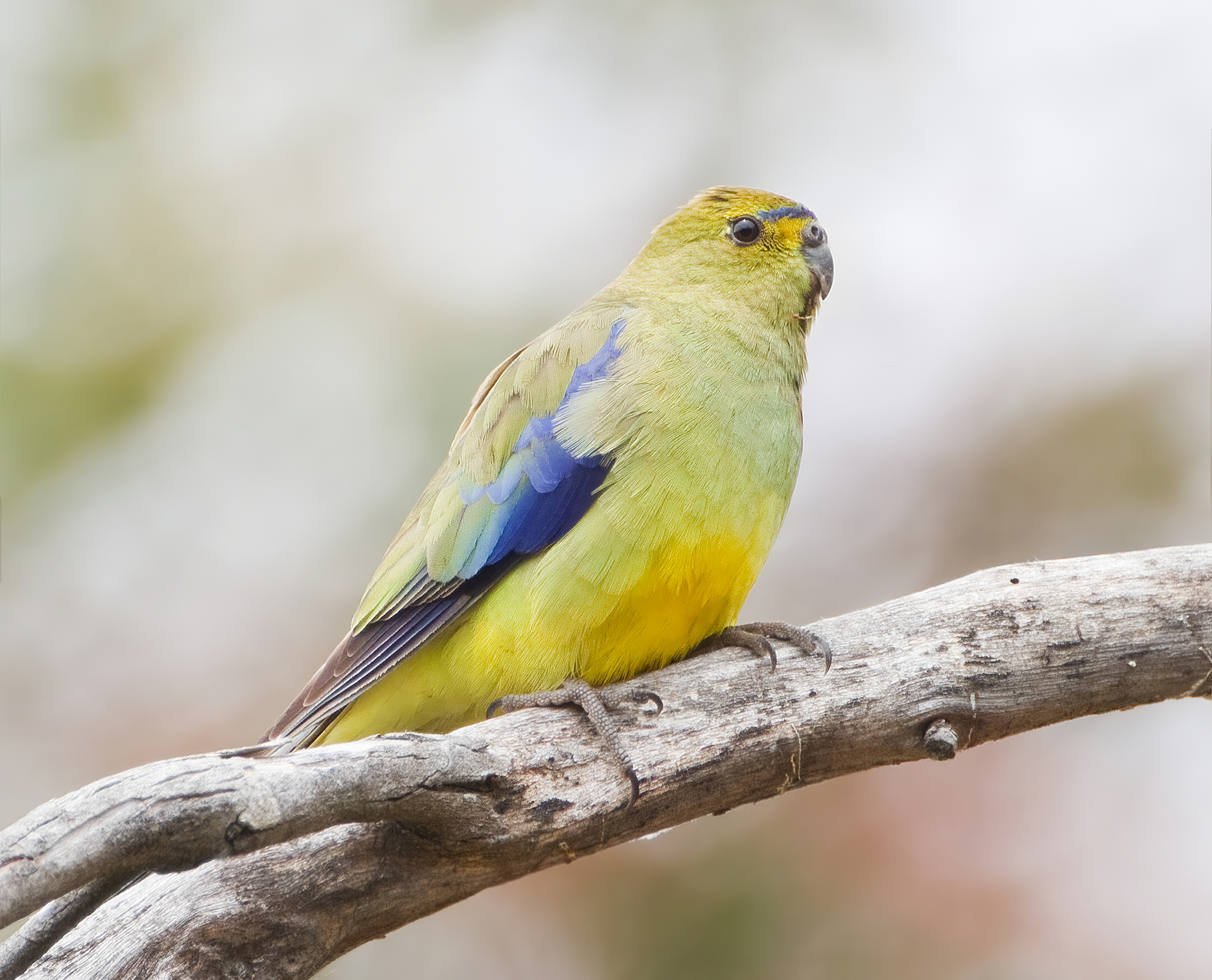
Blue-winged Parrot
Neophema chrysostoma
Photo: Wikimedia Commons (CC) via https://en.wikipedia.org/wiki/Blue-winged_parrot
Overview
Neophema chrysostoma is a small parrot measuring around 20-22 cm in length, identifiable by its grass-green upperparts, yellow-green underparts, and the deep blue frontal band that gives the species its common name. Like other members of the genus Neophema, it is a ground-foraging bird, feeding primarily on the seeds of grasses and low shrubs, and it often moves in small flocks outside the breeding season. Through seed consumption and dispersal, it plays a modest role in shaping vegetation dynamics in the open habitats it occupies.
The species is endemic to Australia, with its range centered on Tasmania and the southeastern mainland, including Victoria and parts of South Australia and New South Wales. It occupies a wide array of habitats, including forests, shrubland, grassland, semi-arid desert country, coastal margins, and modified agricultural or artificial landscapes, reflecting a degree of ecological flexibility uncommon among parrots.
Despite this adaptability, the species is classified as Vulnerable, with a decreasing population trend. Key threats include predation and competition from invasive species, pressure from problematic native species, and habitat degradation linked to ongoing droughts. Conversion of land to annual and perennial non-timber crops has reduced available foraging and nesting habitat, while altered fire regimes and fire suppression practices continue to affect the structure of native vegetation it depends on.
Conservation attention has focused on habitat protection within Tasmania and southeastern Australia, monitoring of population trends, and research into breeding ecology and migratory movements between mainland and island populations. Broader landscape management efforts targeting invasive predators and fire regimes also indirectly benefit the species.
Current trends suggest continued gradual decline unless habitat loss and predation pressures are addressed, though the species remains relatively widespread across its range.
The Blue-winged Parrot faces pressure from introduced animals and diseases competing with or preying on it, as well as native species that cause problems such as predation or competition for nesting spots. Prolonged dry periods, the conversion of land into farms for growing crops, and both destructive wildfires and habitat changes from fire management practices further reduce the safe spaces and food sources this bird needs. These threats are ongoing and show no clear signs of easing.
Habitat
Conservation measures underway
Other threatened species in PSITTACIDAE

Threatened in Australia
Frequently asked questions
Why is Blue-winged Parrot classified as Vulnerable?
Where does Blue-winged Parrot live?
What are the main threats to Blue-winged Parrot?
Get weekly conservation intelligence
One short digest a week of the most striking species and country data we ship, plus breaking conservation news paired with our database where it matters.
Free, no spam. One-click unsubscribe in every email.