
Blue Mountain Water Skink
Eulamprus leuraensis
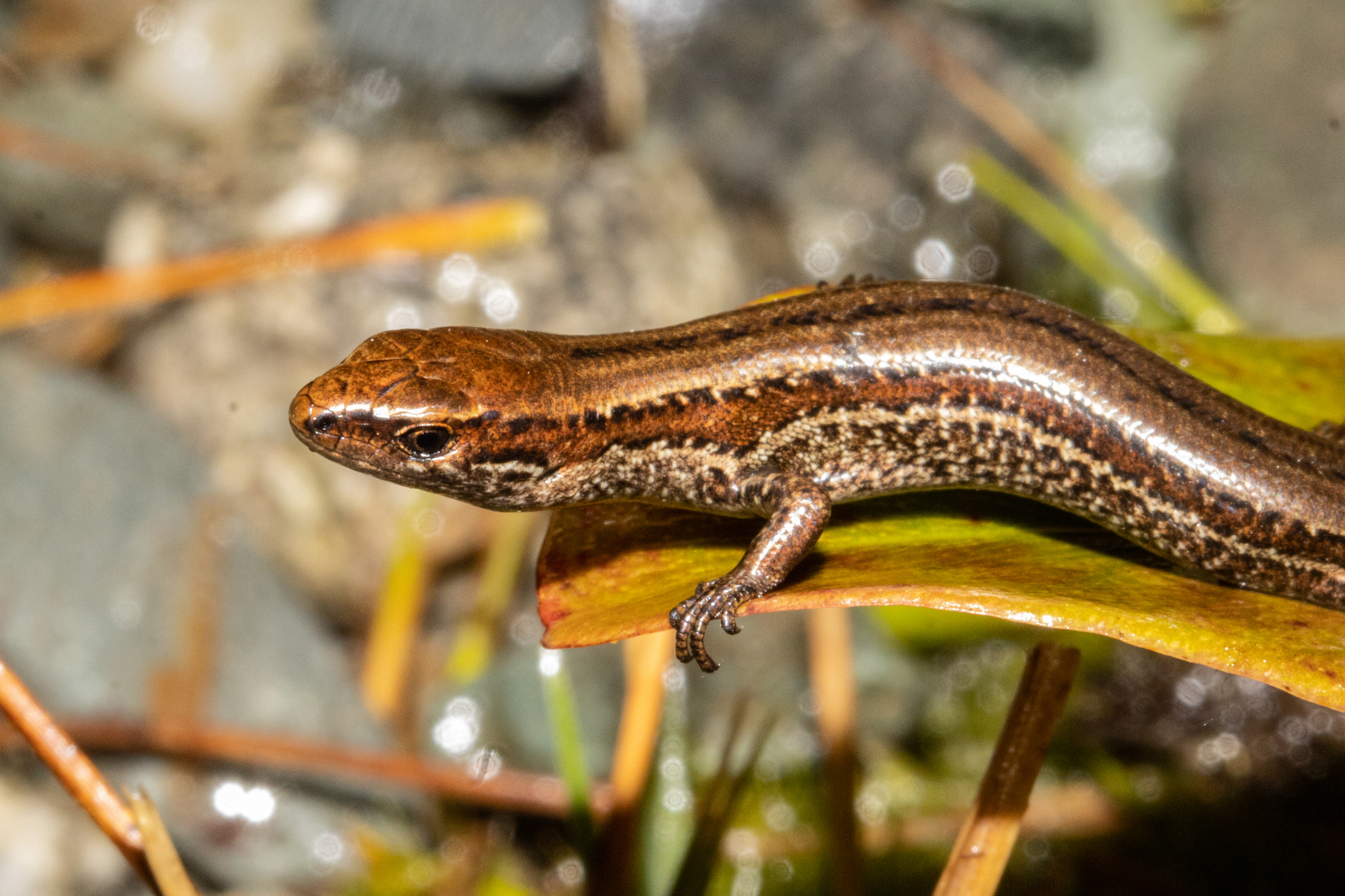
Photo: Wikimedia Commons (CC) via https://en.wikipedia.org/wiki/Blue_Mountains_water_skink
Overview
The Blue Mountain Water Skink is a medium-sized skink with a glossy, dark bronze to blackish body, often marked with fine speckling, and a long tail typical of the genus Eulamprus. It is a diurnal, semi-aquatic reptile that basks on vegetation and rock at the edges of its wetland habitat, retreating quickly into water or dense sedge when disturbed. As an insectivore, it contributes to invertebrate population control within the fragile upland swamp ecosystems it inhabits.
This species is endemic to Australia, restricted to a small number of isolated montane swamps, bogs, and fens in and around the Blue Mountains and Southern Highlands of New South Wales. It depends heavily on permanently moist, densely vegetated sedgeland habitat within a broader matrix of eucalypt forest and shrubland, and does not readily disperse between these fragmented wetland patches.
Its restricted, patchy distribution makes it highly vulnerable to habitat loss and degradation. Ongoing threats include urban and residential development, mining and quarrying (including longwall coal mining, which can alter swamp hydrology), road construction, and broader ecosystem modification through drainage and altered water flows. Changed fire regimes, along with historical logging, further degrade swamp condition, while pollution and climate-driven shifts in rainfall and vegetation compound pressures on remaining populations.
Conservation efforts include legal protection under Australian state and federal threatened species legislation, habitat mapping and monitoring of known swamp colonies, and management actions aimed at protecting swamp hydrology from mining subsidence and development impacts.
Given its fragmented distribution, small and declining population, and multiple concurrent habitat threats, the species' outlook remains poor, with continued decline expected unless swamp habitats are more effectively protected from hydrological disturbance and land-use pressure.
The Blue Mountain Water Skink is losing its swampy habitat as land is cleared for housing developments, mining and quarrying operations, and new roads, while logging and other land modifications further degrade the boggy areas it depends on. It also faces harm from pollution, climate-driven changes to its wetland habitat, and altered fire patterns from both wildfires and fire management practices. These threats are all currently ongoing and show no signs of easing.
Habitat
Conservation measures underway
Other threatened species in SCINCIDAE

Threatened in Australia
Frequently asked questions
Why is Blue Mountain Water Skink classified as Endangered?
Where does Blue Mountain Water Skink live?
What are the main threats to Blue Mountain Water Skink?
Get weekly conservation intelligence
One short digest a week of the most striking species and country data we ship, plus breaking conservation news paired with our database where it matters.
Free, no spam. One-click unsubscribe in every email.