
Crax alberti
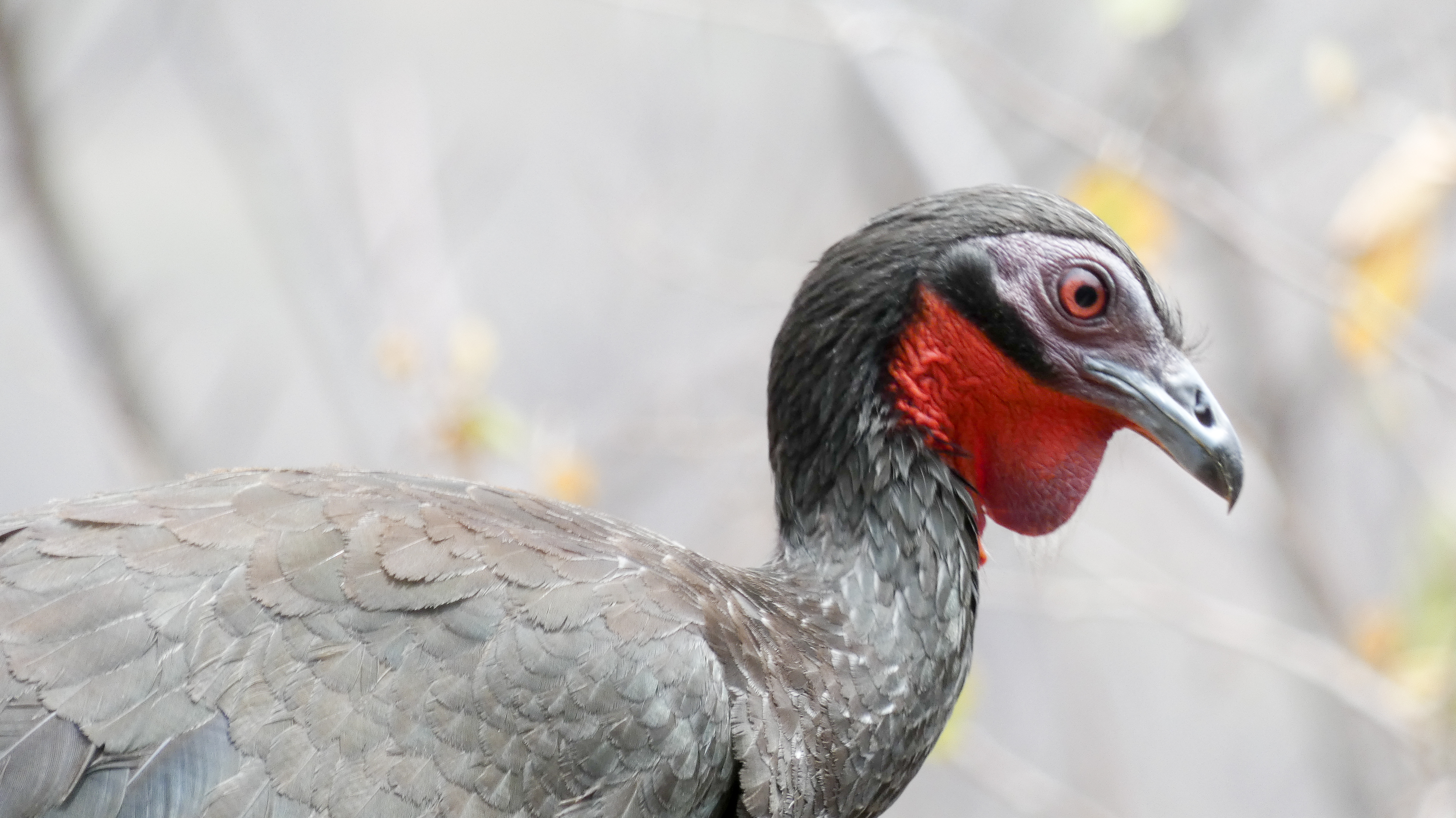
Photo: Wikimedia Commons (CC) via https://en.wikipedia.org/wiki/Blue-billed_curassow
Overview
The blue-billed curassow is a species of bird in the family Cracidae, the chachalacas, guans, and curassows. It is endemic to Colombia.
The Blue-knobbed Curassow faces severe population decline primarily due to extensive deforestation and habitat fragmentation across Colombia's Caribbean coastal region. Hunting pressure for subsistence and commercial purposes has further reduced already small populations, while agricultural expansion and cattle ranching continue to eliminate remaining forest patches. The species' large body size and ground-dwelling habits make it particularly vulnerable to both habitat loss and hunting pressure.
Habitat
The Blue-knobbed Curassow inhabits humid lowland and foothill forests of Colombia's Caribbean coastal region, particularly in the Magdalena Valley and surrounding mountain ranges. It prefers dense primary forest with closed canopy but can occasionally be found in mature secondary forest areas.
Conservation measures underway
Other threatened species in CRACIDAE

Threatened in Colombia
Frequently asked questions
Why is Crax alberti classified as Critically Endangered?
Where does Crax alberti live?
What are the main threats to Crax alberti?
Get weekly conservation intelligence
One short digest a week of the most striking species and country data we ship, plus breaking conservation news paired with our database where it matters.
Free, no spam. One-click unsubscribe in every email.