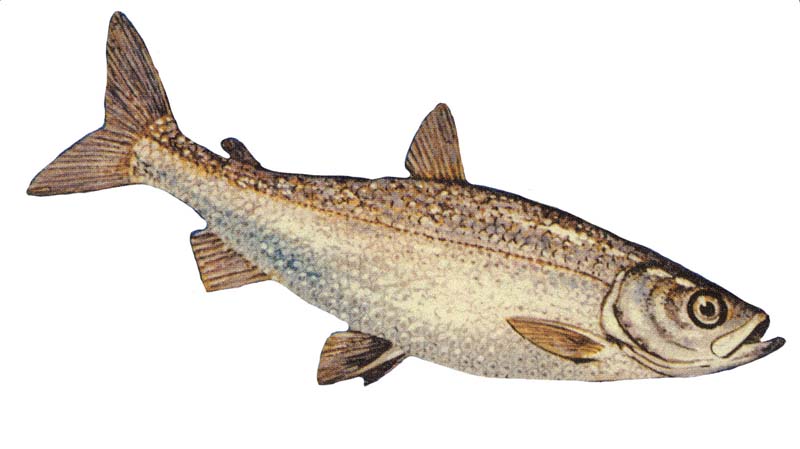
Bloater
Coregonus hoyi
Photo: Wikimedia Commons (CC) via https://en.wikipedia.org/wiki/Coregonus_hoyi
Overview
Coregonus hoyi, also known as the bloater, is a species or form of freshwater whitefish in the family Salmonidae. It is a silvery-coloured herring-like fish, 25.5 centimetres (10.0 in) long. It is found in most of the Great Lakes and in Lake Nipigon, and inhabits underwater slopes. This fish is not to be confused with the extinct deepwater cisco, a large fish that shared a common name with the bloater.
The Bloater faces significant threats from habitat degradation in the Great Lakes ecosystem, where invasive species and water quality changes have disrupted its deep-water environment. Climate change is altering thermal stratification patterns in these lakes, affecting the cold, oxygen-rich waters this species requires for survival and reproduction.
Habitat
Deep, cold waters of the Great Lakes, typically found in profundal zones at depths of 40-200 meters where temperatures remain consistently cold year-round. Prefers well-oxygenated hypolimnetic waters with soft substrates where it feeds on zooplankton and small invertebrates.
Other threatened species in Salmonidae
Threatened in Canada
Frequently asked questions
Why is Bloater classified as Vulnerable?
Where does Bloater live?
What are the main threats to Bloater?
Get weekly conservation intelligence
One short digest a week of the most striking species and country data we ship, plus breaking conservation news paired with our database where it matters.
Free, no spam. One-click unsubscribe in every email.