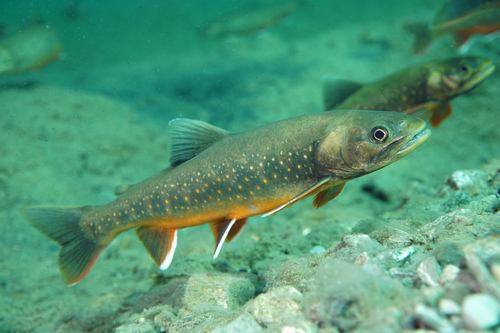
Salvelinus obtusus
Photo: iNaturalist: (c) Christa Rohrbach, some rights reserved (CC BY-NC-SA)
Overview
Salvelinus obtusus, commonly called the blunt-nosed Irish charr or blunt-snouted Irish char, is a species of lacustrine char fish in the family Salmonidae, found in the Lakes of Killarney, Ireland.
The Blunt-snouted charr is critically endangered due to its extremely limited range in a single lake system in Russia, making it highly vulnerable to environmental changes. The species faces severe threats from habitat degradation, water pollution, and potential climate change impacts on its cold-water lake environment.
Habitat
Salvelinus obtusus is only found in Muckross Lake and Lough Leane, and is threatened by eutrophication.
It was formerly found in Lough Tay, Lough Dan, Lough Nalughraman and Lough Acoose, but is now considered extirpated at those sites and is critically endangered.
Other threatened species in Salmonidae
Threatened in Ireland


Frequently asked questions
Why is Salvelinus obtusus classified as Critically Endangered?
Where does Salvelinus obtusus live?
What are the main threats to Salvelinus obtusus?
Get weekly conservation intelligence
One short digest a week of the most striking species and country data we ship, plus breaking conservation news paired with our database where it matters.
Free, no spam. One-click unsubscribe in every email.