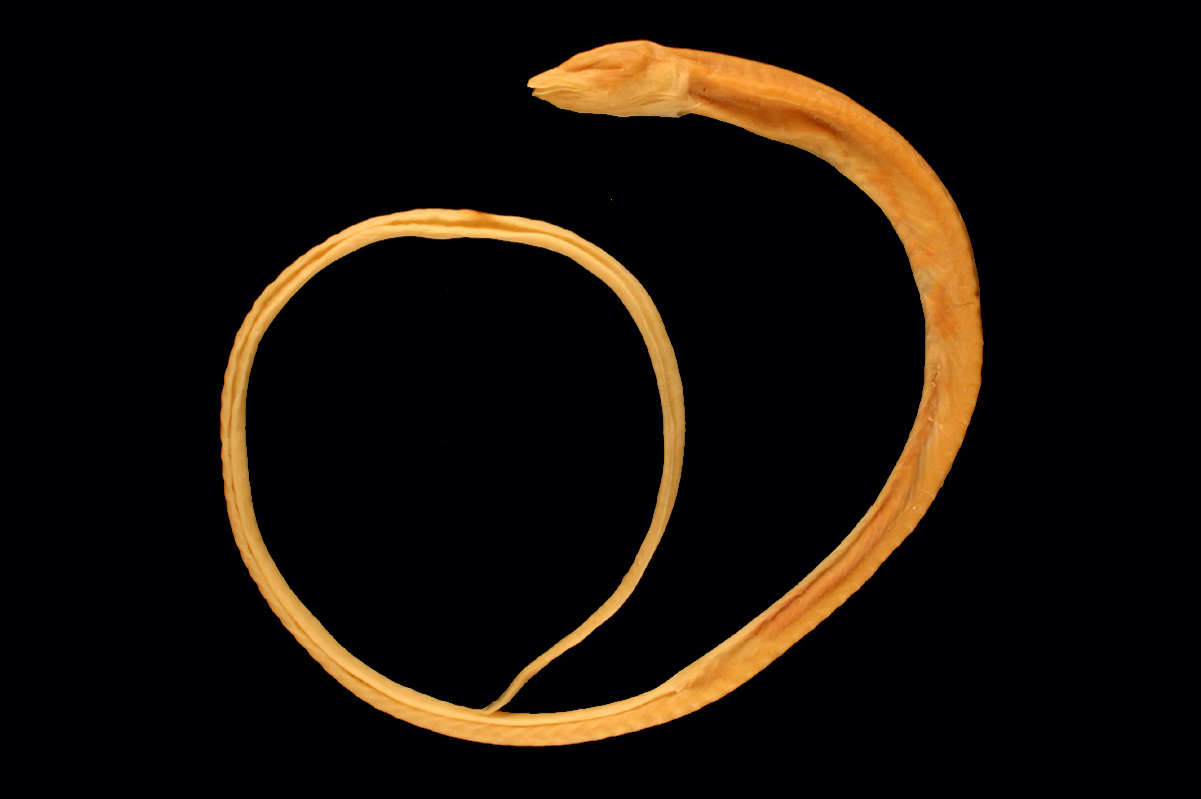
Ophisternon candidum
Photo: Wikimedia Commons (CC) via https://en.wikipedia.org/wiki/Blind_cave_eel
Overview
Ophisternon candidum is a blind, unpigmented eel-like fish adapted entirely to subterranean life. Lacking functional eyes and body pigmentation, it relies on non-visual sensory systems to navigate and hunt within the darkness of groundwater systems. As an air-breathing synbranchid, it can gulp air at the water surface within cave pools, an adaptation useful in oxygen-poor subterranean waters.
Within its ecosystem it likely functions as a predator of small invertebrates and other aquatic organisms sharing the same groundwater habitat, though its cryptic lifestyle limits detailed ecological study.
The species is restricted to a small area of the Cape Range peninsula and surrounding coastal plain in northwestern Western Australia, where it inhabits freshwater and anchialine cave systems and other subterranean aquatic habitats, including waters with marine coastal or supratidal influence. This extreme habitat specialization means its entire known population exists within a very limited geographic footprint.
Threats to the species stem from human activity around and above its cave and aquifer habitats. Urban and tourism-related development, livestock grazing, and mining and quarrying activities in the region can alter groundwater flow, water quality, and recharge patterns. Recreational activities, including cave diving and tourism at karst sites, pose disturbance risks, while invasive species and unspecified pollution sources threaten water quality within the aquifer system.
Incidental capture during fishing or harvesting of aquatic resources is also recorded as a threat.
Conservation attention has focused on protecting the karst and groundwater systems of the Cape Range region, including habitat protections linked to national park and reserve status in the area. Population trends remain unknown due to the difficulty of surveying subterranean habitats. Given its narrow range and reliance on vulnerable groundwater ecosystems, the species remains at ongoing risk, with its long-term outlook dependent on effective protection of regional aquifer integrity.
This underground blind eel is threatened by expanding towns and cities, tourism development, farming and livestock activities, and mining and quarrying operations near its groundwater habitat. It also faces pressure from pollution, invasive species, recreational disturbance, and being caught or harvested from its aquatic environment. These combined ongoing pressures suggest the threats are stable to intensifying rather than decreasing.
Habitat
Conservation measures underway
Other threatened species in SYNBRANCHIDAE
Threatened in Australia
Frequently asked questions
Why is Ophisternon candidum classified as Endangered?
Where does Ophisternon candidum live?
What are the main threats to Ophisternon candidum?
Get weekly conservation intelligence
One short digest a week of the most striking species and country data we ship, plus breaking conservation news paired with our database where it matters.
Free, no spam. One-click unsubscribe in every email.