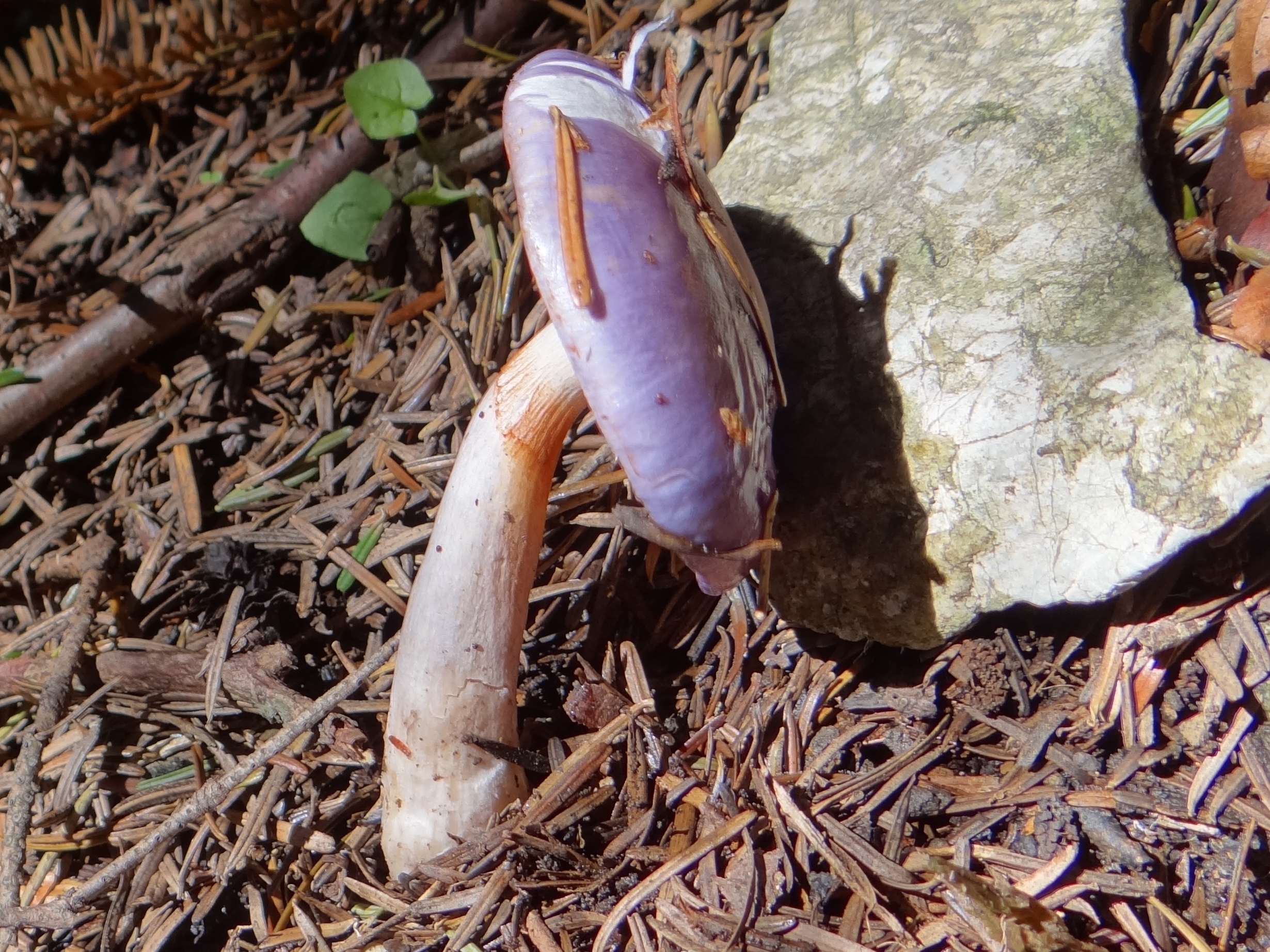
Cortinarius salor
Photo: Wikimedia Commons (CC) via https://en.wikipedia.org/wiki/Cortinarius_salor
Overview
Cortinarius salor is a basidiomycete fungus of the genus Cortinarius native to Europe and Asia, spreading as far east as Japan and New Guinea. It is also found in conifer forests of the North American Pacific Northwest.
Blauer Schleimkopf faces significant threats from habitat degradation and loss of suitable forest ecosystems due to logging, agricultural expansion, and climate change impacts on soil chemistry and moisture regimes. The species' specialized ecological requirements and dependence on specific host trees make it particularly vulnerable to environmental changes that disrupt mycorrhizal relationships.
Habitat
This fungus occurs in mature coniferous and mixed forests, particularly in acidic soils under spruce and fir trees where it forms mycorrhizal associations. It typically inhabits montane and boreal forest ecosystems with specific soil chemistry and moisture conditions.
Other threatened species in Cortinariaceae
Frequently asked questions
Why is Cortinarius salor classified as Vulnerable?
Where does Cortinarius salor live?
What are the main threats to Cortinarius salor?
Get weekly conservation intelligence
One short digest a week of the most striking species and country data we ship, plus breaking conservation news paired with our database where it matters.
Free, no spam. One-click unsubscribe in every email.