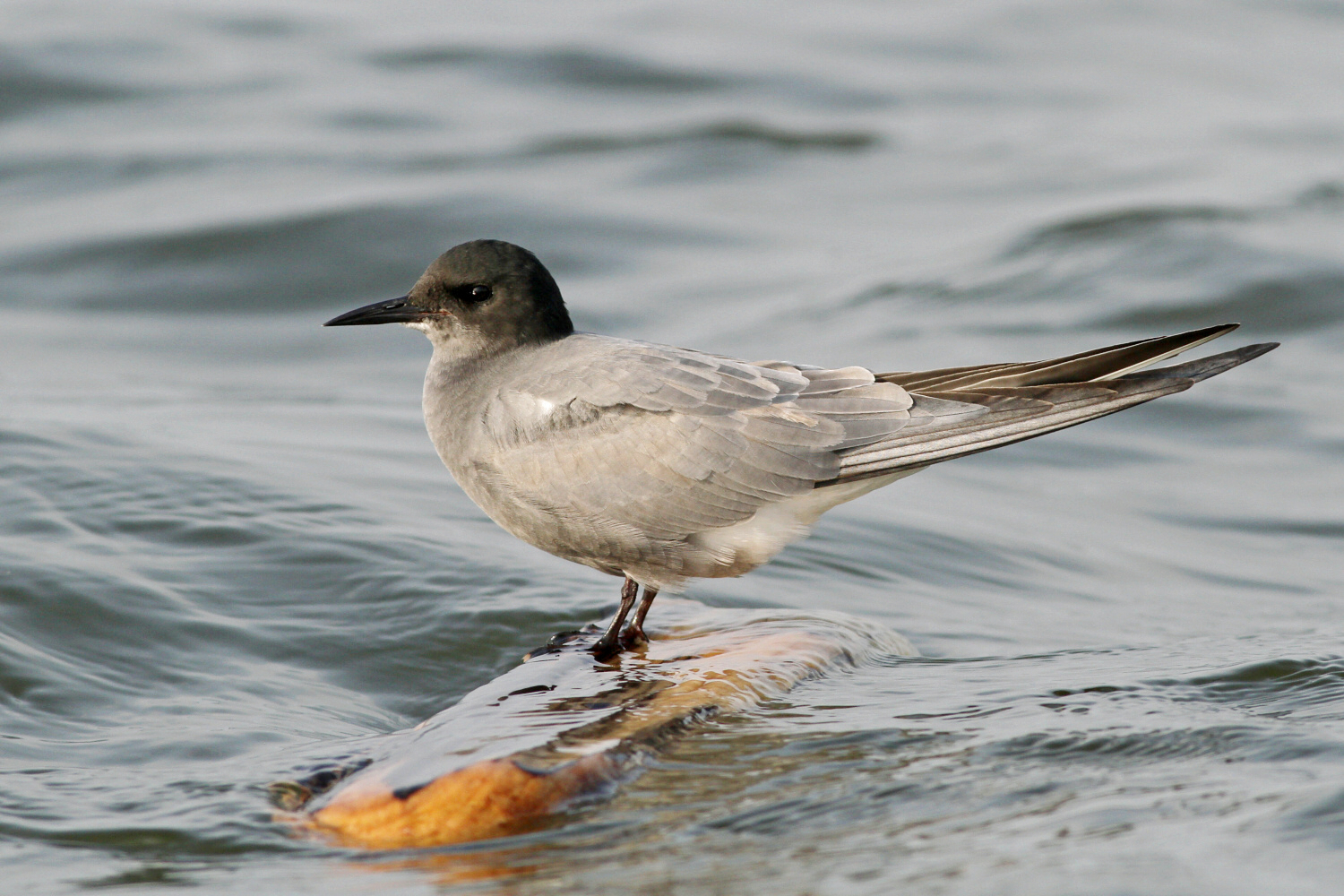
Black Tern
Chlidonias niger
Photo: Wikimedia Commons (CC) via https://en.wikipedia.org/wiki/Black_tern
Overview
The black tern is a small tern generally found in or near inland water that breeds in Europe, Western Asia and North America. In winter the birds migrate to coastal areas of Africa and South America.
Black Terns face significant population declines across their range due to widespread wetland habitat loss and degradation from agricultural conversion, urban development, and water management practices. Climate change compounds these pressures by altering precipitation patterns and water levels in breeding marshes, while pollution and human disturbance at nesting sites further threaten reproductive success.
Habitat
Shallow freshwater marshes, prairie potholes, flooded agricultural fields, and coastal lagoons with emergent vegetation such as cattails and sedges. During migration and winter, they utilize coastal waters, estuaries, and large inland water bodies.
Other threatened species in Laridae


Frequently asked questions
Why is Black Tern classified as Vulnerable?
Where does Black Tern live?
What are the main threats to Black Tern?
Get weekly conservation intelligence
One short digest a week of the most striking species and country data we ship, plus breaking conservation news paired with our database where it matters.
Free, no spam. One-click unsubscribe in every email.