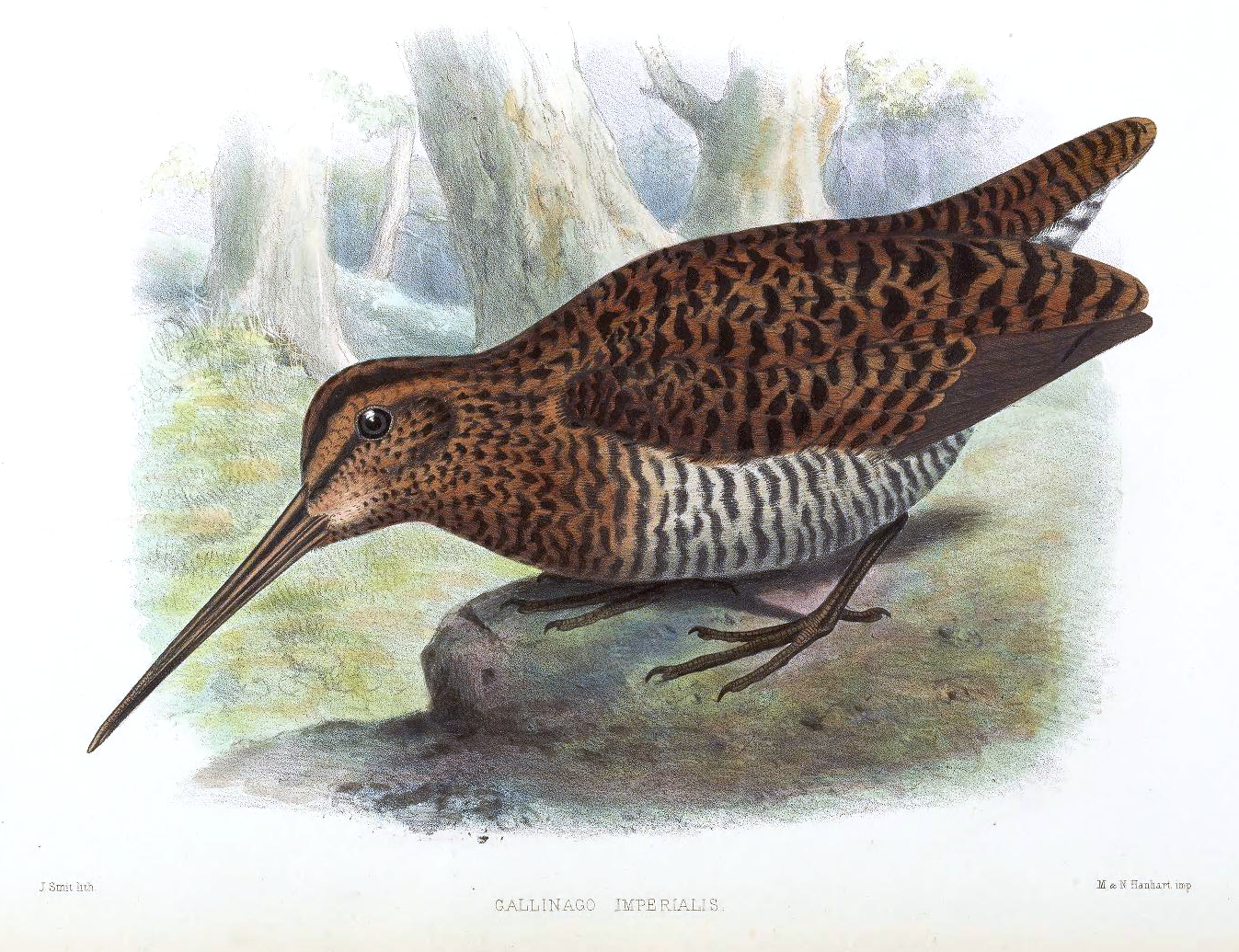
Black-tailed Godwit
VUVulnerable

Black-tailed Godwit

Limosa limosa

The black-tailed godwit is a large, long-legged, long-billed shorebird first described by Carl Linnaeus in 1758. It is a member of the godwit genus, Limosa.

Photo: Wikimedia Commons (CC) via https://en.wikipedia.org/wiki/Black-tailed_godwit

01Classification

Taxonomy & Classification

Kingdom

Animalia

Phylum

Chordata

Class

Aves

Order

Charadriiformes

Family

Scolopacidae

Genus

Limosa

Black-tailed Godwit belongs to the family Scolopacidae, order Charadriiformes, within the Aves class.

02Description

Species Profile

The black-tailed godwit is a large, long-legged, long-billed shorebird first described by Carl Linnaeus in 1758. It is a member of the godwit genus, Limosa. There are four subspecies, all with orange head, neck and chest in breeding plumage and dull grey-brown winter coloration, and distinctive black and white wingbar at all times.

The Black-tailed Godwit faces significant population declines across much of its range due to widespread habitat loss and degradation of wetland ecosystems. Agricultural intensification has eliminated crucial breeding and feeding areas, while climate change alters the timing and availability of food resources during migration and breeding seasons.

Key Facts

IUCN StatusVulnerable (VU)
GroupBirds
03Habitat

Habitat & Distribution

Breeds in wet grasslands, meadows, and agricultural fields with short vegetation near water bodies. During migration and winter, occupies coastal mudflats, estuaries, saltmarshes, and inland wetlands including rice fields and shallow freshwater lakes.

FRESHWATERMajorTERRESTRIALMajor
04Threats

Threats

Agricultural intensification and conversion of grasslands

HighOngoing

Wetland drainage and habitat loss

HighOngoing

Climate change affecting migration timing and food availability

MediumOngoing

Disturbance at roosting and feeding sites

MediumOngoing

Predation pressure from introduced species

MediumOngoing
07National Status

National vs Global Threat Status

How this species is assessed at the national level compared to its IUCN global status (VU).

CountryNational StatusGlobal StatusComparison
NPNTNear ThreatenedVUVulnerableLower local risk
AUENEndangeredVUVulnerableHigher local risk
EUNTNear ThreatenedVUVulnerableLower local risk

National Red List data sourced from the National Red List Project (nationalredlist.org, ZSL) and country-specific Red List authorities.

Community

Community Sightings

Report a sighting

No community sightings yet. Be the first to report!

07Sources

Sources & Attribution

How to Cite

IUCN: IUCN (2025). The IUCN Red List of Threatened Species. Version 2025-1. Available at: https://www.iucnredlist.org. doi:10.2305/IUCN.UK.2025-1.RLTS

GBIF: GBIF.org (2025). GBIF Home Page. Available at: https://www.gbif.org

National Red Lists: ZSL (2025). National Red List. Zoological Society of London. Available at: https://www.nationalredlist.org

This page: SpeciesRadar (2025). Black-tailed Godwit (Limosa limosa). SpeciesRadar: Intelligence for Earth's Biodiversity. Available at: https://speciesradar.org/species/black-tailed-godwit

Full citation guide & data usage terms