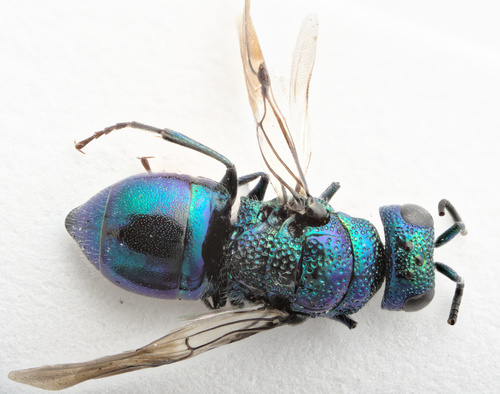
Philoctetes truncatus
Photo: iNaturalist: (c) Paul Vignac, all rights reserved, uploaded by Paul Vignac
Overview
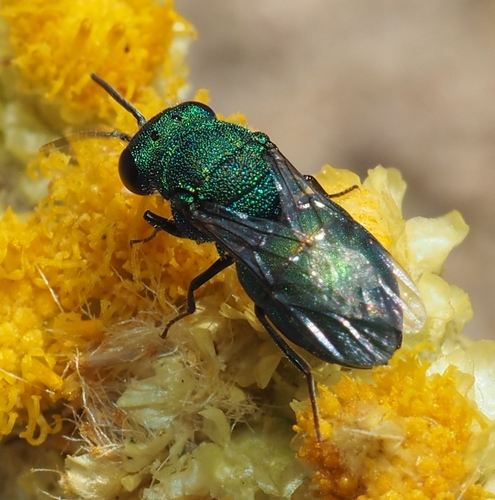
The blå glansguldstekel (Philoctetes truncatus) is a striking metallic blue-green parasitoid wasp with a distinctive truncated abdomen and iridescent sheen. This specialized wasp plays a crucial ecological role as a parasitoid of wood-boring beetle larvae, helping regulate forest pest populations in Scandinavian coniferous ecosystems.
The blå glansguldstekel (Philoctetes truncatus) faces severe population declines due to habitat loss from agricultural expansion and urban development across its limited range. Climate change is altering the availability of its specialized host species, while pesticide use in agricultural areas directly impacts both the wasp and its prey insects.
Habitat
This species inhabits mixed deciduous and coniferous forests, forest edges, and semi-natural grasslands with abundant flowering plants, typically at elevations between 200-800 meters. It requires areas with dead wood and bark beetle populations that serve as hosts for its parasitoid lifestyle.
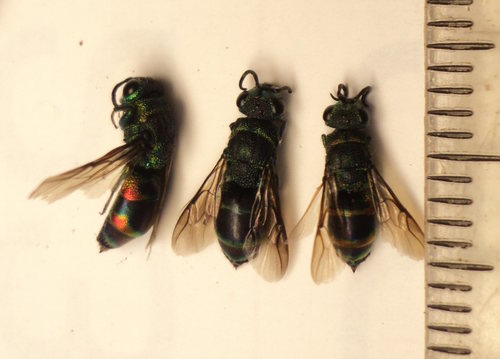
Other threatened species in Chrysididae
Frequently asked questions
Why is Philoctetes truncatus classified as Critically Endangered?
Where does Philoctetes truncatus live?
What are the main threats to Philoctetes truncatus?
Get weekly conservation intelligence
One short digest a week of the most striking species and country data we ship, plus breaking conservation news paired with our database where it matters.
Free, no spam. One-click unsubscribe in every email.