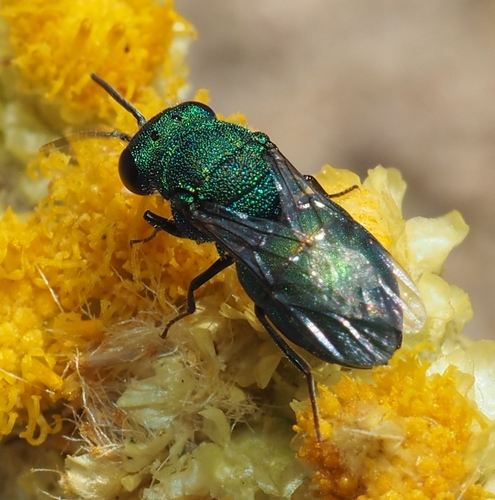
Spinolia unicolor
Photo: iNaturalist: (c) fauna_mirifica, all rights reserved, uploaded by fauna_mirifica
Overview
The azurguldstekel (Spinolia unicolor) is a critically endangered cuckoo wasp belonging to the family Chrysididae, distinguished by its metallic blue-green coloration and compact body measuring approximately 6-8 millimeters in length. This parasitoid wasp exhibits the characteristic brilliant metallic sheen typical of chrysidid wasps, with a robust build and distinctive sculptured integument. Endemic to specific regions of northern Europe, particularly Scandinavia, S.
unicolor inhabits sandy heathlands, coastal dunes, and open woodland edges where its host species construct their nests. As a cleptoparasitic species, the azurguldstekel exhibits highly specialized behavior, seeking out the nests of solitary bees and wasps where females deposit their eggs. The larvae then consume the host's provisions and eventually the host larva itself.
This intricate life cycle requires precise timing and specific microhabitat conditions, making the species extremely vulnerable to environmental changes. Currently classified as Critically Endangered by the IUCN, S. unicolor faces severe population pressures due to habitat fragmentation and the decline of its host species.
The wasp's flight period is typically restricted to late spring and early summer, when adults emerge to mate and locate suitable host nests. Recent collaborative efforts between Scandinavian entomological societies and conservation organizations have begun systematic surveys to better understand remaining populations, offering hope for targeted habitat management strategies that could benefit both this species and its associated host community.
Spinolia unicolor faces severe decline primarily due to the loss and fragmentation of sandy heathland habitats essential for both the wasp and its solitary bee and wasp hosts. Intensive agricultural practices and urban development have eliminated much of the species' historical range, while remaining habitat patches have become increasingly isolated. The specialized parasitic relationship makes S. unicolor particularly vulnerable to the concurrent decline of its host species, creating a cascading effect where reduced host availability further constrains an already critically small population.
Habitat
Spinolia unicolor inhabits sandy heathlands, coastal dune systems, and open woodland margins characterized by sparse vegetation and exposed sandy soils. These environments support the diverse community of solitary bees and wasps that serve as essential hosts for this parasitoid species.
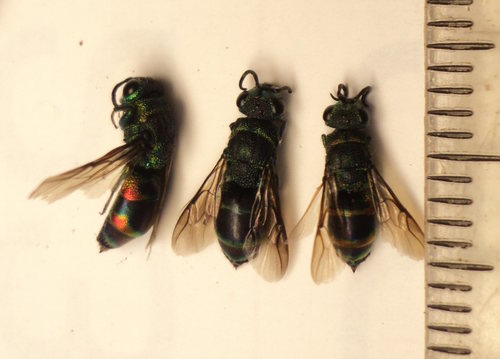
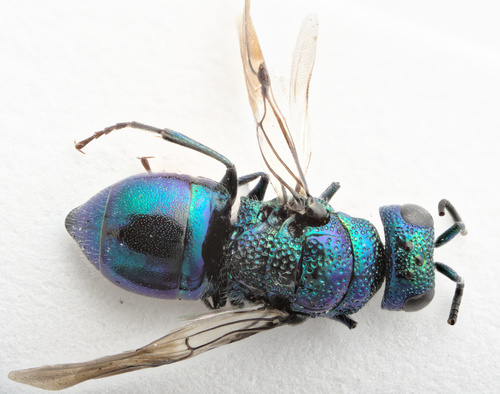
Other threatened species in Chrysididae
Frequently asked questions
Why is Spinolia unicolor classified as Critically Endangered?
Where does Spinolia unicolor live?
What are the main threats to Spinolia unicolor?
Get weekly conservation intelligence
One short digest a week of the most striking species and country data we ship, plus breaking conservation news paired with our database where it matters.
Free, no spam. One-click unsubscribe in every email.