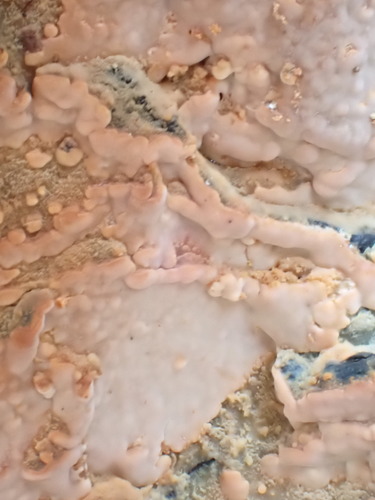
Milking Crust
Gloiothele lactescens
Photo: iNaturalist: (c) Christian Apschner, some rights reserved (CC BY-NC), uploaded by Christian Apschner
Overview
Bitter olieskind (Gloiothele lactescens) is a distinctive fungal species characterized by its bitter taste and milky latex that exudes when the fruiting body is damaged or cut. This saprophytic fungus plays a crucial ecological role in forest ecosystems by decomposing organic matter and forming mycorrhizal associations with tree roots, facilitating nutrient exchange.
Bitter olieskind faces significant threats from habitat degradation and fragmentation of its specialized forest environments. Climate change and human encroachment into its native range are reducing suitable habitat availability and quality, while its limited dispersal ability makes population recovery difficult.
Habitat
This fungal species inhabits temperate and boreal forest ecosystems, typically growing on decaying wood substrates in moist, shaded woodland environments. It shows preference for mature forest stands with stable microclimatic conditions and abundant woody debris.
Other threatened species in Peniophoraceae
Frequently asked questions
Why is Milking Crust classified as Vulnerable?
Where does Milking Crust live?
What are the main threats to Milking Crust?
Get weekly conservation intelligence
One short digest a week of the most striking species and country data we ship, plus breaking conservation news paired with our database where it matters.
Free, no spam. One-click unsubscribe in every email.