Ixalodectes flectocercus
Overview
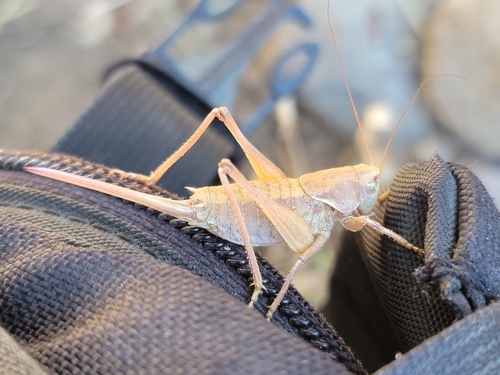
Ixalodectes flectocercus is a member of the katydid family Tettigoniidae, a group of orthopteran insects recognized by their elongated hind legs, long filamentous antennae, and specialized structures for producing and detecting sound. Like other katydids, individuals of this species are likely nocturnal, relying on camouflage against foliage and acoustic signaling for mate attraction and territorial communication. As herbivorous or omnivorous insects, katydids typically contribute to their ecosystems as plant consumers and as prey for birds, reptiles, and other insectivores, forming part of the food web in the forested habitats they occupy.
This species is found only in Australia, restricted to terrestrial habitats, likely within forested or vegetated ecosystems that provide the structural complexity and microclimate stability that many tettigoniids require.
Ixalodectes flectocercus is classified as Critically Endangered, facing a combination of ongoing pressures. Deforestation and logging, along with agricultural expansion, are reducing and altering the vegetation this species depends on. Habitat fragmentation compounds these losses by isolating remaining populations, limiting dispersal and gene flow.
Climate change and associated temperature shifts pose additional stress, potentially altering microhabitat conditions the species relies on. Because populations are already small, genetic bottlenecks further increase vulnerability to environmental and demographic fluctuations.
Population trends for this species remain unknown, reflecting limited monitoring data. No specific population figures are available. Conservation measures targeting this species specifically are not well documented, though broader habitat protection and forest conservation efforts in Australia may offer incidental benefit.
Given the convergence of habitat loss, fragmentation, climate pressures, and small population size, the species' outlook remains precarious without targeted research and habitat safeguards.
Ixalodectes flectocercus is losing its home as forests are cut down for timber and cleared to make way for farmland, leaving the remaining habitat broken up into small, isolated patches. On top of this, shifting temperatures linked to climate change are altering the conditions it depends on, while its already small population faces added risk from inbreeding and reduced genetic diversity. These combined pressures appear to be ongoing and intensifying rather than easing.
Habitat
This species inhabits humid montane cloud forests at elevations between 1,200-2,400 meters, requiring specific temperature and moisture conditions found in undisturbed primary forest canopy. It shows strong preference for areas with dense epiphytic growth and consistent fog cover that maintains the microclimate essential for its survival.
Other threatened species in TETTIGONIIDAE
Threatened in Australia
Frequently asked questions
Why is Ixalodectes flectocercus classified as Critically Endangered?
Where does Ixalodectes flectocercus live?
What are the main threats to Ixalodectes flectocercus?
Get weekly conservation intelligence
One short digest a week of the most striking species and country data we ship, plus breaking conservation news paired with our database where it matters.
Free, no spam. One-click unsubscribe in every email.