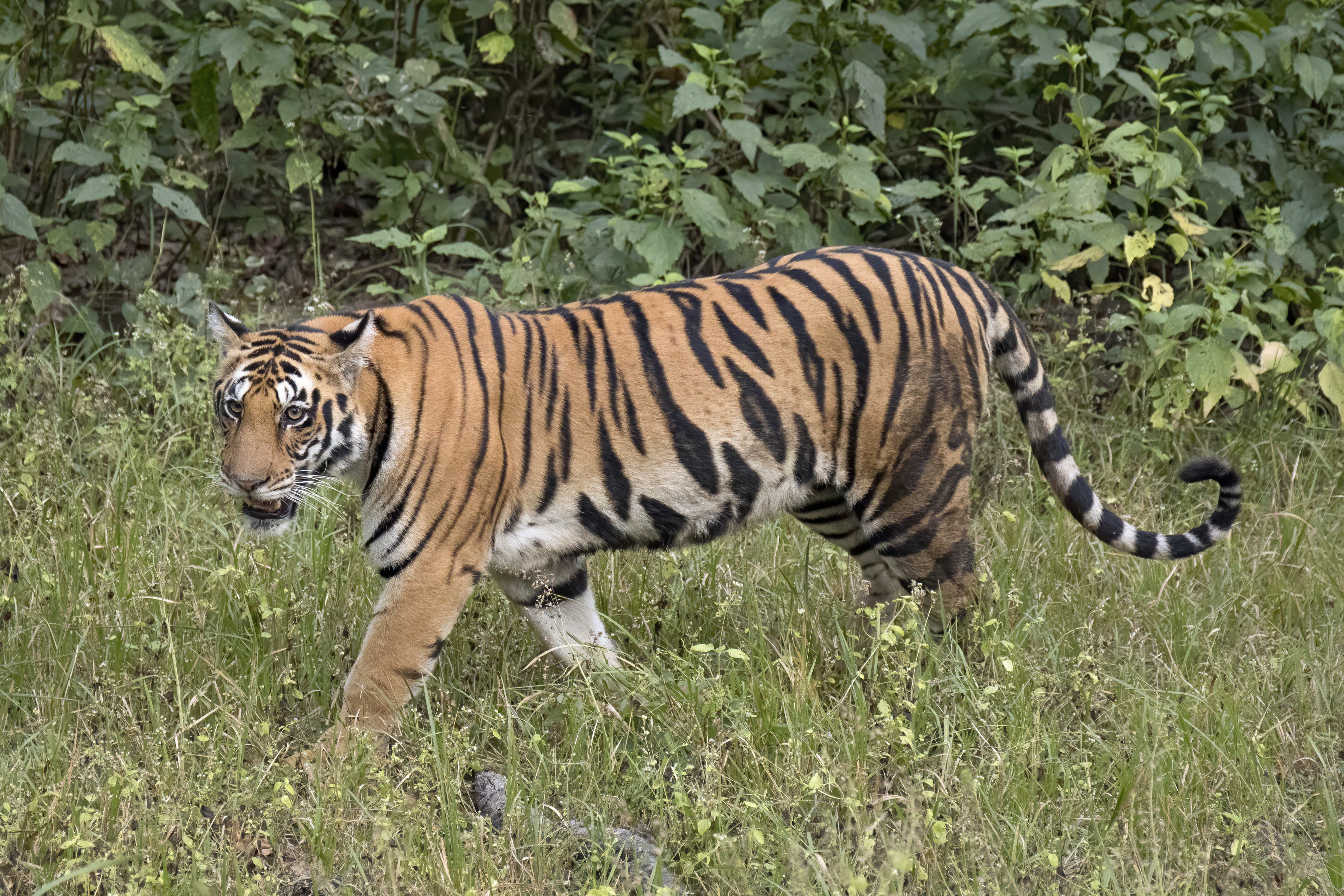
Tiger
Panthera tigris
Photo: Wikimedia Commons (CC) via https://en.wikipedia.org/wiki/Tiger
Overview
The tiger is the world's largest wild cat, distinguished by its orange coat with distinctive black stripes and powerful muscular build. Adult males can weigh up to 300 kilograms, while females are typically smaller. Tigers are solitary, territorial predators that primarily hunt large ungulates including deer, wild boar, and water buffalo.
As apex predators, they play a crucial role in maintaining ecosystem balance by controlling herbivore populations and supporting biodiversity in their habitats.
Tigers inhabit diverse environments across Asia, from the subtropical forests and grasslands of the Terai region spanning India, Nepal, and Bhutan, to the mangrove swamps of Bangladesh's Sundarbans, and the taiga forests of Russia. Their range extends across 16 countries, though populations are now fragmented and significantly reduced from historical distributions.
The species faces multiple ongoing threats that drive its endangered status and declining population trend. Poaching for illegal wildlife trade remains the primary threat, with tiger parts valued in traditional medicine markets. Human-wildlife conflict results in retaliatory killings when tigers prey on livestock or threaten communities.
Habitat loss continues through logging, agricultural expansion, and urban development, while transportation infrastructure like Terai highways creates barriers and collision risks.
Conservation efforts include anti-poaching patrols, habitat protection through national parks and reserves, wildlife corridors to connect fragmented populations, and community-based programs addressing human-wildlife conflict. International cooperation through CITES regulations targets illegal trade.
Despite intensive conservation efforts, the tiger's outlook remains precarious. While some populations have shown recent stability or modest increases, the overall global trend continues downward due to persistent threats and habitat fragmentation.
Tigers face their greatest threats from poachers who kill them to sell their body parts illegally, and from local communities who kill tigers in retaliation when they attack livestock or people. Other major dangers include the clearing of forests for farming and logging, the expansion of roads and cities into tiger habitat, and vehicle strikes on highways that cut through their territory. Most of these threats are ongoing and persistent, with no clear signs of decreasing pressure on tiger populations.
Habitat
Conservation measures underway
Other threatened species in FELIDAE

Threatened in Bangladesh



Frequently asked questions
Why is Tiger classified as Endangered?
Where does Tiger live?
What are the main threats to Tiger?
Get weekly conservation intelligence
One short digest a week of the most striking species and country data we ship, plus breaking conservation news paired with our database where it matters.
Free, no spam. One-click unsubscribe in every email.