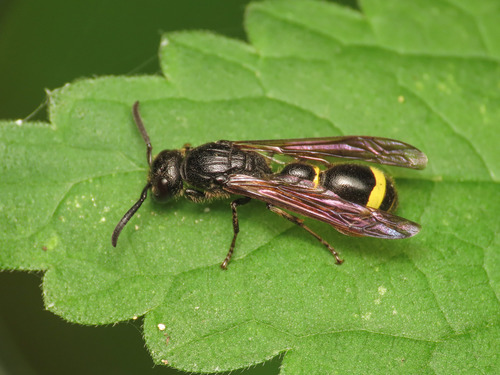
Discoelius zonalis
Photo: iNaturalist: (c) Emanuele Santarelli, some rights reserved (CC BY-SA), uploaded by Emanuele Santarelli
Overview
The behangerswesp (Discoelius zonalis) is a distinctive parasitoid wasp characterized by its metallic bronze-green coloration with prominent yellow banding across the abdomen. This specialized insect plays a crucial ecological role as a biological control agent, parasitizing the larvae of wood-boring beetles in temperate forest ecosystems.
Discoelius zonalis faces significant threats from habitat loss due to deforestation and agricultural expansion in its native range. Climate change and pesticide use in agricultural areas further compound the pressures on this wasp species, affecting both its nesting sites and prey availability.
Habitat
This species inhabits tropical and subtropical forest edges, woodland clearings, and adjacent agricultural landscapes where it constructs nests in soil banks and sandy substrates. It requires areas with adequate prey populations of other insects and access to suitable nesting sites in well-drained soils.
Other threatened species in Eumenidae

Threatened in Åland Islands


Frequently asked questions
Why is Discoelius zonalis classified as Vulnerable?
Where does Discoelius zonalis live?
What are the main threats to Discoelius zonalis?
Get weekly conservation intelligence
One short digest a week of the most striking species and country data we ship, plus breaking conservation news paired with our database where it matters.
Free, no spam. One-click unsubscribe in every email.