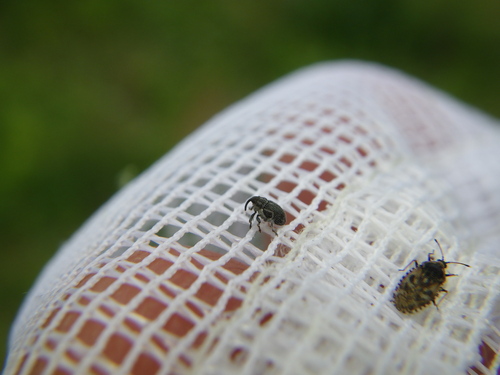
Ceutorhynchus hirtulus
Photo: iNaturalist: (c) Frederik Rothe, some rights reserved (CC BY-NC), uploaded by Frederik Rothe
Overview
The Behaarde boorsnuitkever (Ceutorhynchus hirtulus) is a small, hairy weevil species characterized by its distinctive elongated snout and bristly body surface. This specialized beetle plays an important ecological role as both herbivore and prey species, with adults feeding on cruciferous plants while larvae develop within plant stems and seed pods.
Ceutorhynchus hirtulus is declining primarily due to habitat loss and degradation of its specialized host plant environments. Agricultural intensification and changes in land management practices have reduced the availability of suitable breeding sites and food sources.
Habitat
The species inhabits flower-rich meadows, field margins, and extensively managed agricultural areas where wild cruciferous plants such as mustards and cresses grow abundantly. It particularly favors areas with a mosaic of cultivated fields and semi-natural grasslands that provide both breeding sites and overwintering habitat.
Other threatened species in Curculionidae
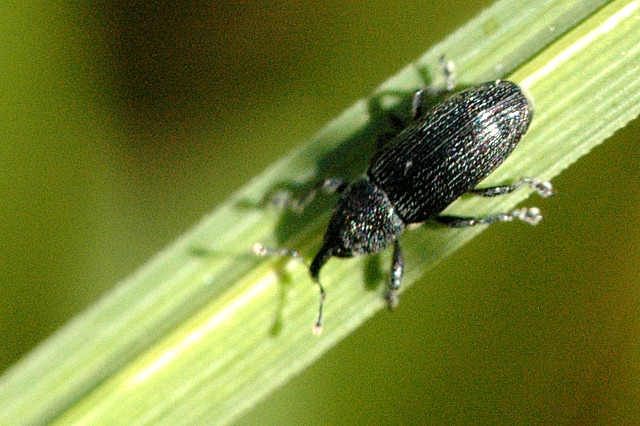

Threatened in Åland Islands


Frequently asked questions
Why is Ceutorhynchus hirtulus classified as Endangered?
Where does Ceutorhynchus hirtulus live?
What are the main threats to Ceutorhynchus hirtulus?
Get weekly conservation intelligence
One short digest a week of the most striking species and country data we ship, plus breaking conservation news paired with our database where it matters.
Free, no spam. One-click unsubscribe in every email.