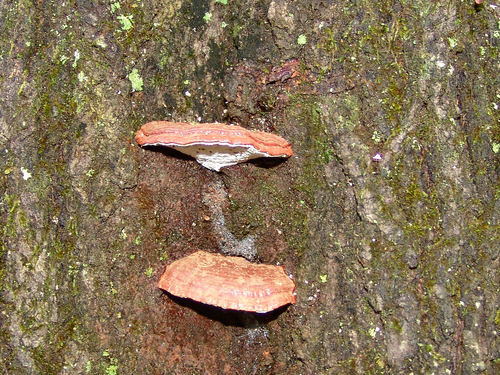
Beeswax Bracket
Ganoderma pfeifferi
Photo: iNaturalist: (c) Gordon C. Snelling, some rights reserved (CC BY), uploaded by Gordon C. Snelling
Overview
The Beeswax Bracket (Ganoderma pfeifferi) is a distinctive polypore fungus characterized by its waxy, yellowish to amber-colored fruiting bodies that develop a glossy, resinous surface resembling beeswax. This bracket fungus plays a crucial ecological role as a wood decomposer, breaking down dead and dying hardwood trees and contributing to nutrient cycling in forest ecosystems.
Ganoderma pfeifferi faces severe decline primarily due to habitat loss from deforestation and urban development in its limited European range. The species is particularly vulnerable because it requires specific host trees and old-growth forest conditions that are increasingly rare.
Habitat
Ganoderma pfeifferi grows on the trunks and large branches of dead or dying deciduous trees, particularly favoring oak, beech, and maple species in temperate broadleaf forests. It typically occurs in mature forest stands with abundant coarse woody debris and high humidity levels.
Other threatened species in Polyporaceae
Frequently asked questions
Why is Beeswax Bracket classified as Endangered?
Where does Beeswax Bracket live?
What are the main threats to Beeswax Bracket?
Get weekly conservation intelligence
One short digest a week of the most striking species and country data we ship, plus breaking conservation news paired with our database where it matters.
Free, no spam. One-click unsubscribe in every email.