
Bearded Guan
Penelope barbata
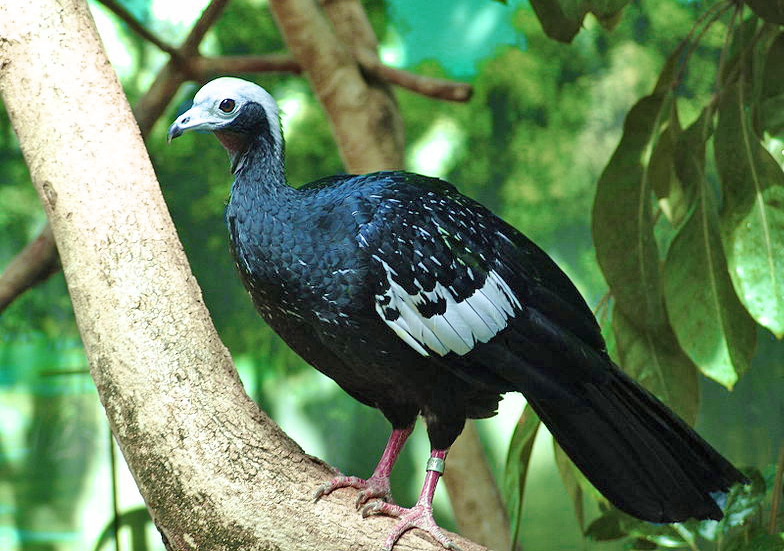
Photo: Wikimedia Commons (CC) via https://en.wikipedia.org/wiki/Bearded_guan
Overview
The bearded guan is a species of bird in the family Cracidae, the chachalacas, guans, and curassows. It is found in Ecuador and Peru. Its natural habitat is subtropical or tropical moist montane forest. It is threatened by habitat loss.
The Bearded Guan faces significant pressure from habitat loss due to deforestation and agricultural expansion throughout its range in the cloud forests of the Andes. Hunting pressure for subsistence and commercial purposes has further reduced populations, while the species' restricted range and specific habitat requirements make it particularly vulnerable to environmental changes.
Habitat
Inhabits humid montane cloud forests and elfin forests on the eastern slopes of the Andes, typically between 1,500-3,000 meters elevation. Prefers dense, moss-covered forests with thick canopy cover and high humidity levels characteristic of cloud forest ecosystems.
Other threatened species in Cracidae


Frequently asked questions
Why is Bearded Guan classified as Vulnerable?
Where does Bearded Guan live?
What are the main threats to Bearded Guan?
Get weekly conservation intelligence
One short digest a week of the most striking species and country data we ship, plus breaking conservation news paired with our database where it matters.
Free, no spam. One-click unsubscribe in every email.