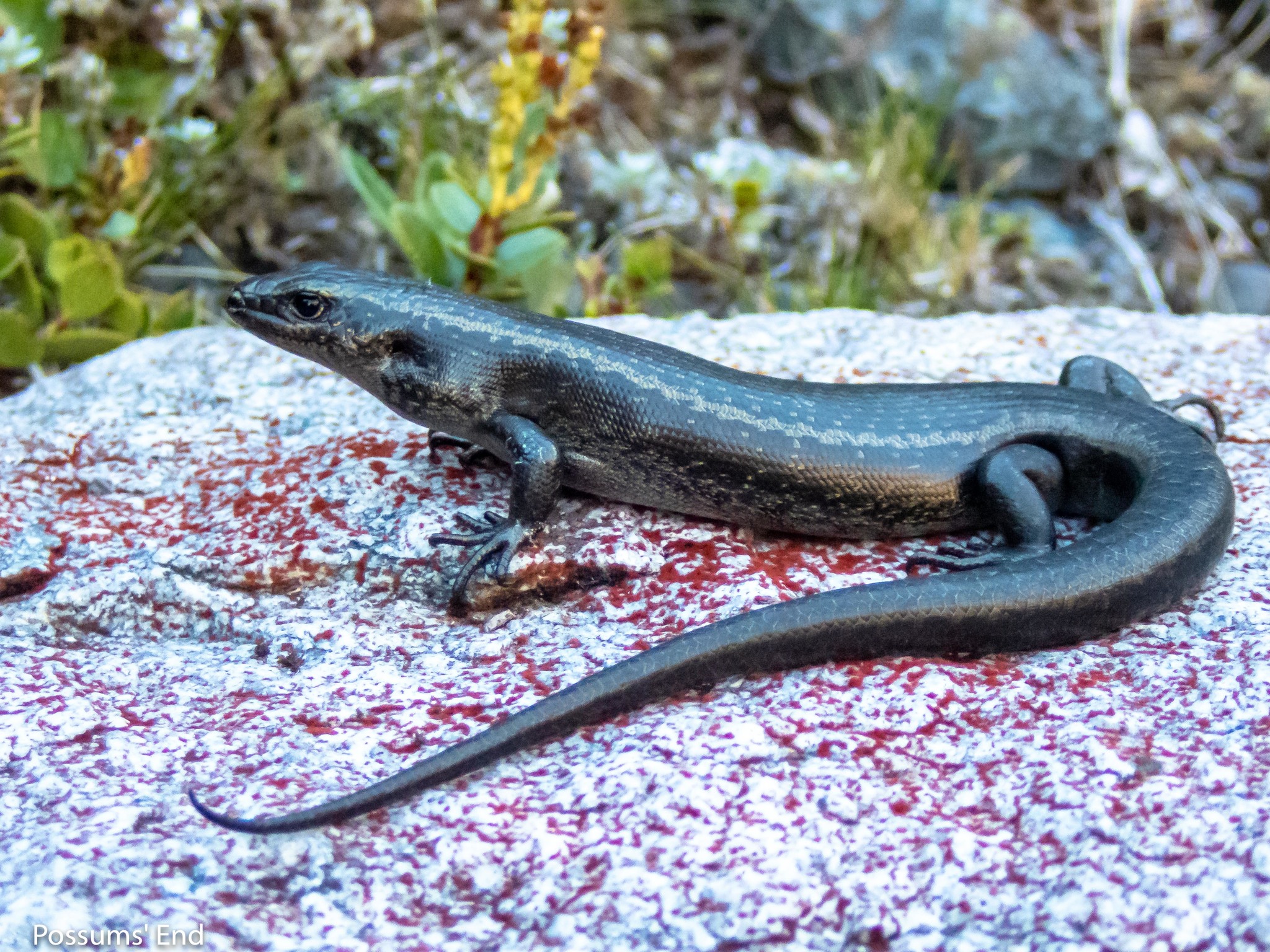
Barrier Skink
Oligosoma judgei
Photo: Photo: Wikimedia Commons, CC BY-SA
Overview
The Barrier Skink is a small, endemic New Zealand reptile measuring approximately 60-70mm in length. This nocturnal lizard displays distinctive copper-bronze coloration with darker banding patterns along its body. Like other members of the Oligosoma genus, it is viviparous, giving birth to live young rather than laying eggs.
The species plays a role in its ecosystem as both predator of small invertebrates and prey for larger animals, contributing to nutrient cycling in its limited habitat.
This critically endangered skink is restricted to the Barrier Islands off New Zealand's North Island, specifically Great Barrier Island and Little Barrier Island. It inhabits coastal areas, favoring rocky shorelines, boulder beaches, and adjacent vegetation zones where it shelters under rocks and debris during daylight hours.
The primary threat to Barrier Skinks stems from introduced mammalian predators, particularly rats and cats, which prey on both adults and juveniles. Habitat modification from human development and the presence of invasive plant species further compress the available suitable habitat. The species' extremely limited range makes it particularly vulnerable to localized disturbances and environmental changes.
Conservation efforts include predator control programs on both islands, with ongoing monitoring of skink populations. Habitat restoration initiatives aim to remove invasive vegetation and restore native plant communities. Research continues into the species' ecology and population dynamics to inform management strategies.
The current outlook remains precarious due to the species' restricted range and ongoing predation pressure, though active management provides some hope for population stabilization.
The primary threats to the Barrier Skink have not been assessed or documented in available scientific literature. Without a formal threat assessment, it's unclear what specific dangers this species faces, whether from habitat changes, introduced predators, climate impacts, or other factors. The status of threats to this species cannot be determined as increasing, stable, or decreasing due to lack of available data.
Conservation measures underway
Other threatened species in SCINCIDAE

Threatened in New Zealand
Frequently asked questions
Why is Barrier Skink classified as Critically Endangered?
Where does Barrier Skink live?
What are the main threats to Barrier Skink?
Get weekly conservation intelligence
One short digest a week of the most striking species and country data we ship, plus breaking conservation news paired with our database where it matters.
Free, no spam. One-click unsubscribe in every email.