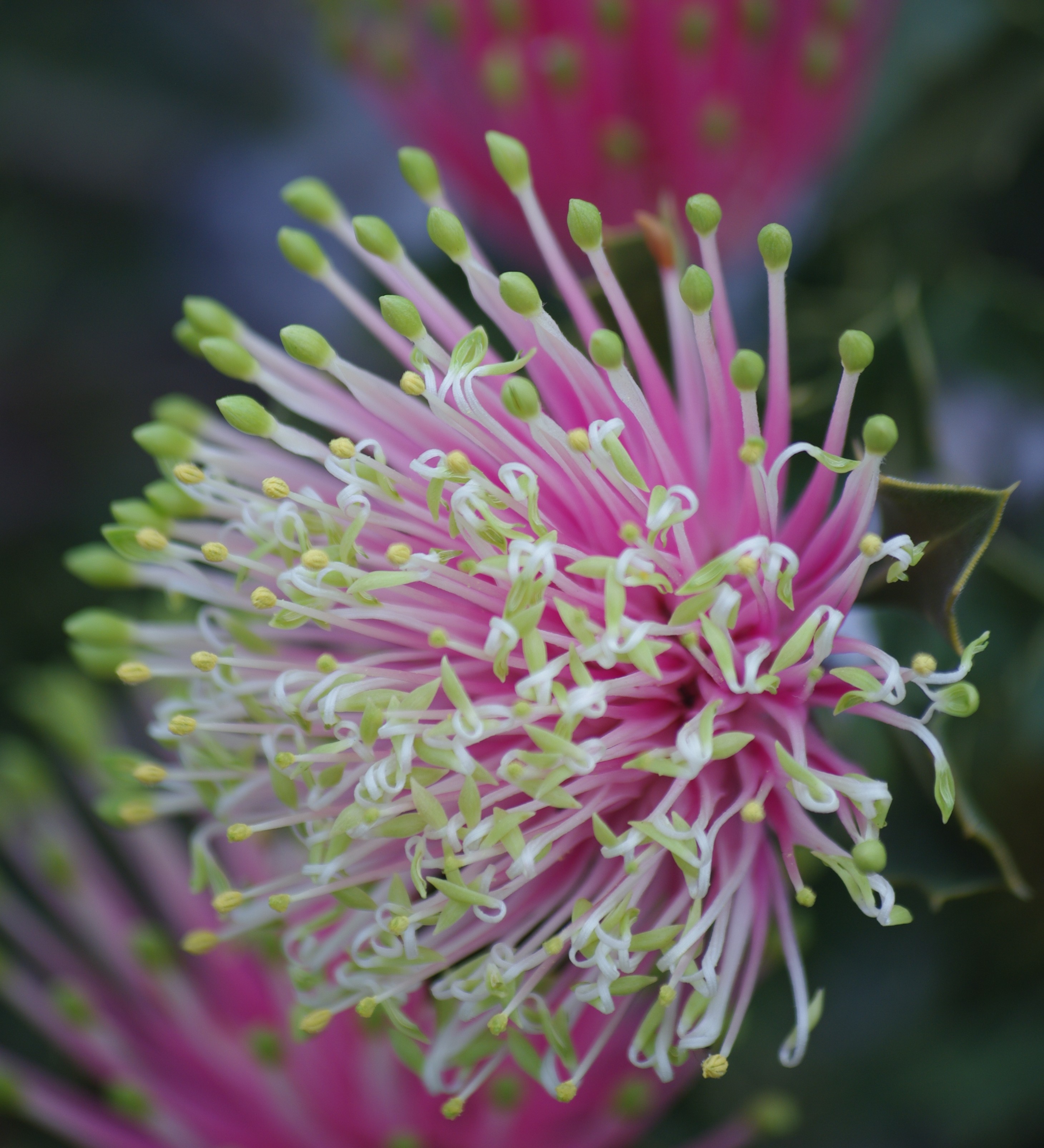
Banksia cuneata
Photo: Wikimedia Commons (CC) via https://en.wikipedia.org/wiki/Banksia_cuneata
Overview
Banksia cuneata is a woody shrub in the family Proteaceae, typically growing several metres tall with wedge-shaped (cuneate) leaves that give the species its epithet. Like other banksias, it produces characteristic flower spikes composed of densely packed small flowers, which develop into woody follicles that release winged seeds, often after fire. It provides nectar and pollen resources for insects and birds, contributing to pollination networks within the shrubland and woodland communities it inhabits.
The species is endemic to a small area of southwestern Australia, occurring in fragmented remnants of forest and shrubland within an agricultural landscape. Its known distribution is limited to a handful of populations, making it highly restricted in range.
Banksia cuneata is classified as Critically Endangered, with a decreasing population trend. Threats include habitat disturbance and fragmentation from roads and rail infrastructure, which isolate populations and increase edge effects. Agricultural and forestry runoff introduces altered nutrient and hydrological conditions unsuitable for the species.
A significant ongoing threat is dieback caused by the introduced pathogen Phytophthora cinnamomi, a root-rot disease affecting many Western Australian native plants. Increasing drought frequency, linked to changing rainfall patterns, adds physiological stress, while inappropriate fire regimes—either too frequent or too infrequent—can disrupt the species' reproductive cycle, which depends on fire for seed release and germination.
Conservation actions include population monitoring, seed banking, and management of Phytophthora through hygiene protocols and access restrictions in known habitat. Some populations occur within protected or actively managed reserves, and translocation and habitat protection measures have been explored to bolster genetic diversity.
Given its restricted range, small number of populations, and multiple compounding threats, the species remains highly vulnerable, with its long-term persistence dependent on continued and effective habitat and disease management.
Banksia cuneata is threatened by road and rail construction that fragments its habitat, along with runoff from nearby farming and forestry operations that pollutes its growing environment. It also faces ongoing damage from plant diseases spread by native species, prolonged droughts that stress the plants, and fires (as well as fire control efforts) that can destroy populations. These threats are currently stable, continuing at their present level rather than clearly worsening or improving.
Habitat
Conservation measures underway
Other threatened species in PROTEACEAE
Threatened in Australia
Frequently asked questions
Why is Banksia cuneata classified as Critically Endangered?
Where does Banksia cuneata live?
What are the main threats to Banksia cuneata?
Get weekly conservation intelligence
One short digest a week of the most striking species and country data we ship, plus breaking conservation news paired with our database where it matters.
Free, no spam. One-click unsubscribe in every email.