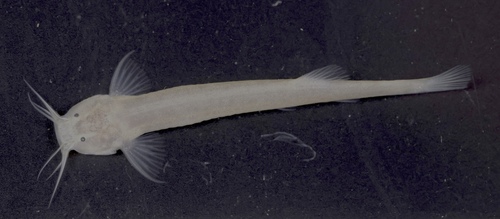
Ituglanis bambui
Photo: Photo: (c) Michi Tobler, all rights reserved, uploaded by Michi Tobler
Overview
Ituglanis bambui is a critically endangered (CR) catfish endemic to the São Francisco River basin in Brazil, representing one of the most threatened freshwater fish species in South America. This small trichomycterid catfish, measuring approximately 4-6 centimeters in length, displays the characteristic elongated body and reduced pigmentation typical of cave-dwelling species. The fish exhibits a translucent to pale coloration with small eyes adapted to low-light conditions, suggesting evolutionary adaptations to subterranean or deep water environments.
Found exclusively in limestone cave systems and associated underground waterways within the Bambuí karst region of Minas Gerais state, this species occupies a highly specialized ecological niche. The fish inhabits cool, oxygen-rich underground streams with stable temperatures and minimal light penetration. Its behavior remains largely cryptic, with individuals typically hiding among rock crevices and cave formations during daylight hours.
As a member of the pencil catfish family, I. bambui likely feeds on small invertebrates, organic detritus, and biofilms present in cave ecosystems. The species' extremely restricted range, encompassing fewer than five known cave systems, makes it particularly vulnerable to environmental changes.
Recent surveys have documented the species in previously unknown cave chambers, offering hope for population stability. Local conservation groups have begun monitoring water quality in key habitat areas, and the Brazilian government has designated several cave systems as protected areas specifically to safeguard this and other endemic cave fauna.
Ituglanis bambui faces severe threats from groundwater extraction and agricultural runoff contaminating the delicate cave ecosystems it depends upon. Mining activities in the Bambuí region pose additional risks through habitat destruction and alteration of underground water flow patterns. The species' extremely limited distribution across fewer than five cave systems means that any localized disturbance could eliminate entire subpopulations, while climate change-induced alterations to regional hydrology threaten the stable water conditions essential for its survival.
Habitat
This species inhabits limestone cave systems and underground waterways within the Bambuí karst formation of Minas Gerais, Brazil. The caves maintain constant cool temperatures and house permanent freshwater streams with high dissolved oxygen levels and minimal light penetration.
Other threatened species in TRICHOMYCTERIDAE

Threatened in Brazil


Frequently asked questions
Why is Ituglanis bambui classified as Critically Endangered?
Where does Ituglanis bambui live?
What are the main threats to Ituglanis bambui?
Get weekly conservation intelligence
One short digest a week of the most striking species and country data we ship, plus breaking conservation news paired with our database where it matters.
Free, no spam. One-click unsubscribe in every email.