Austrosaga spinifer
Overview
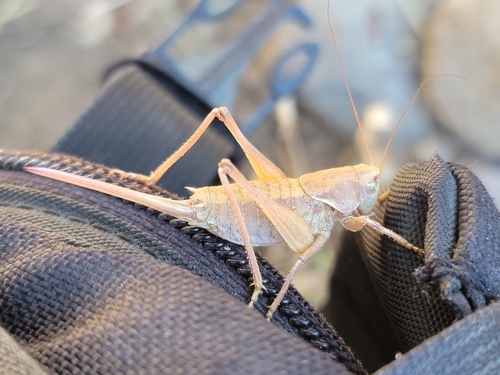
Austrosaga spinifer is a large, flightless katydid belonging to the family Tettigoniidae, a group known for their robust bodies, long antennae, and spined legs adapted for gripping vegetation. Like other members of its genus, it is likely nocturnal, relying on camouflage and cryptic coloration to avoid predators during the day, while becoming active at night to feed on plant material. As with many tettigoniids, males likely produce calls through stridulation to attract mates.
Within its ecosystem, this species contributes to nutrient cycling and serves as a prey source for birds, reptiles, and small mammals.
The species is endemic to Australia, occupying terrestrial habitats within its native range. Specific distribution details are limited, but its survival is closely tied to the persistence of intact native vegetation communities that provide both shelter and food resources.
Austrosaga spinifer is classified as Vulnerable, with population trends currently unknown. The primary threats to its survival include the ongoing expansion and intensification of agriculture, which reduces and degrades native habitat, alongside urban and residential development that further fragments suitable land. Habitat fragmentation limits population connectivity and gene flow, while altered fire regimes—whether through increased frequency or intensity—can destroy critical microhabitats.
Climate change and associated severe weather events compound these pressures by altering vegetation structure and moisture availability.
Specific targeted conservation programs for this species have not been widely documented, though it may benefit indirectly from broader habitat protection and land management initiatives across its Australian range. Given the multiple concurrent and ongoing threats affecting its habitat, and the absence of confirmed population monitoring, the species' long-term outlook remains uncertain, warranting continued attention and further research into its distribution and population status.
Austrosaga spinifer is losing its natural habitat as land is cleared for farming and converted into towns and housing developments, leaving remaining populations increasingly cut off from one another in small, isolated patches. On top of this, shifts in rainfall and temperature patterns along with changes in the frequency or intensity of wildfires are putting extra strain on the species' ability to survive and reproduce. All of these pressures are currently ongoing, suggesting that the overall threat level is stable to intensifying rather than easing.
Habitat
Austrosaga spinifer inhabits open woodlands, grasslands, and scrublands in southeastern Australia, typically favoring areas with scattered trees and dense ground vegetation. The species shows preference for habitats with specific plant communities that provide both shelter and food resources throughout its lifecycle.
Other threatened species in TETTIGONIIDAE
Threatened in Australia
Frequently asked questions
Why is Austrosaga spinifer classified as Vulnerable?
Where does Austrosaga spinifer live?
What are the main threats to Austrosaga spinifer?
Get weekly conservation intelligence
One short digest a week of the most striking species and country data we ship, plus breaking conservation news paired with our database where it matters.
Free, no spam. One-click unsubscribe in every email.