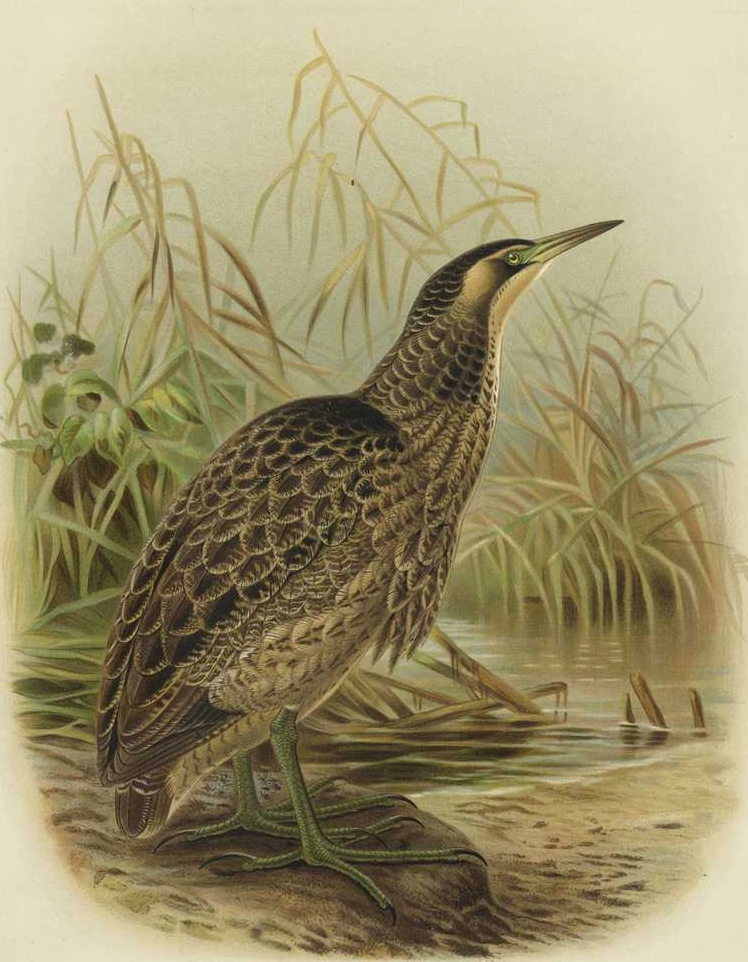
Australasian Bittern
Botaurus poiciloptilus
Photo: Wikimedia Commons (CC) via https://en.wikipedia.org/wiki/Australasian_bittern
Overview
A large, thickset heron with cryptic brown, black, and buff streaked plumage that provides effective camouflage among reeds and rushes. This solitary and largely nocturnal bird is best known for the deep, resonant booming call produced by males during the breeding season, audible over long distances and used to advertise territory. It hunts by standing motionless or moving slowly through dense vegetation, preying on fish, frogs, eels, and invertebrates, and its cryptic behavior—freezing with bill pointed skyward when disturbed—makes it difficult to detect even where present.
As a top predator within wetland food webs, it plays a role in regulating populations of small aquatic vertebrates and invertebrates.
The species occurs in Australia, New Zealand, and New Caledonia, with additional records noted in Nigeria and Tanzania. It depends on densely vegetated freshwater wetlands, particularly those with tall reeds and rushes, as well as adjacent grassland and coastal wetland margins for foraging and nesting.
Its decline is driven by the drainage and degradation of wetlands for urban development and agriculture, altered water regimes from dam construction and water management, and habitat loss from fire and logging activities near wetland margins. Predation by introduced species and continued hunting pressure in some areas compound these losses.
Conservation efforts include wetland restoration and protection programs, water allocation planning to maintain suitable habitat conditions, predator control, and monitoring programs tracking booming male numbers as a population index.
The population continues to decline, and the species remains vulnerable to further wetland loss and modification. Without sustained habitat protection and water management reform, its long-term trajectory remains precarious.
The Australasian Bittern is losing its wetland homes as land is drained and modified for farming, housing, and water management, while introduced predators and hunting add further pressure. Fire and past logging near wetland habitats have also degraded the reedy areas these birds rely on to hide and breed. These combined pressures appear to be ongoing and stable rather than easing.
Habitat
Conservation measures underway
Other threatened species in ARDEIDAE


Threatened in Australia
Frequently asked questions
Why is Australasian Bittern classified as Vulnerable?
Where does Australasian Bittern live?
What are the main threats to Australasian Bittern?
Get weekly conservation intelligence
One short digest a week of the most striking species and country data we ship, plus breaking conservation news paired with our database where it matters.
Free, no spam. One-click unsubscribe in every email.