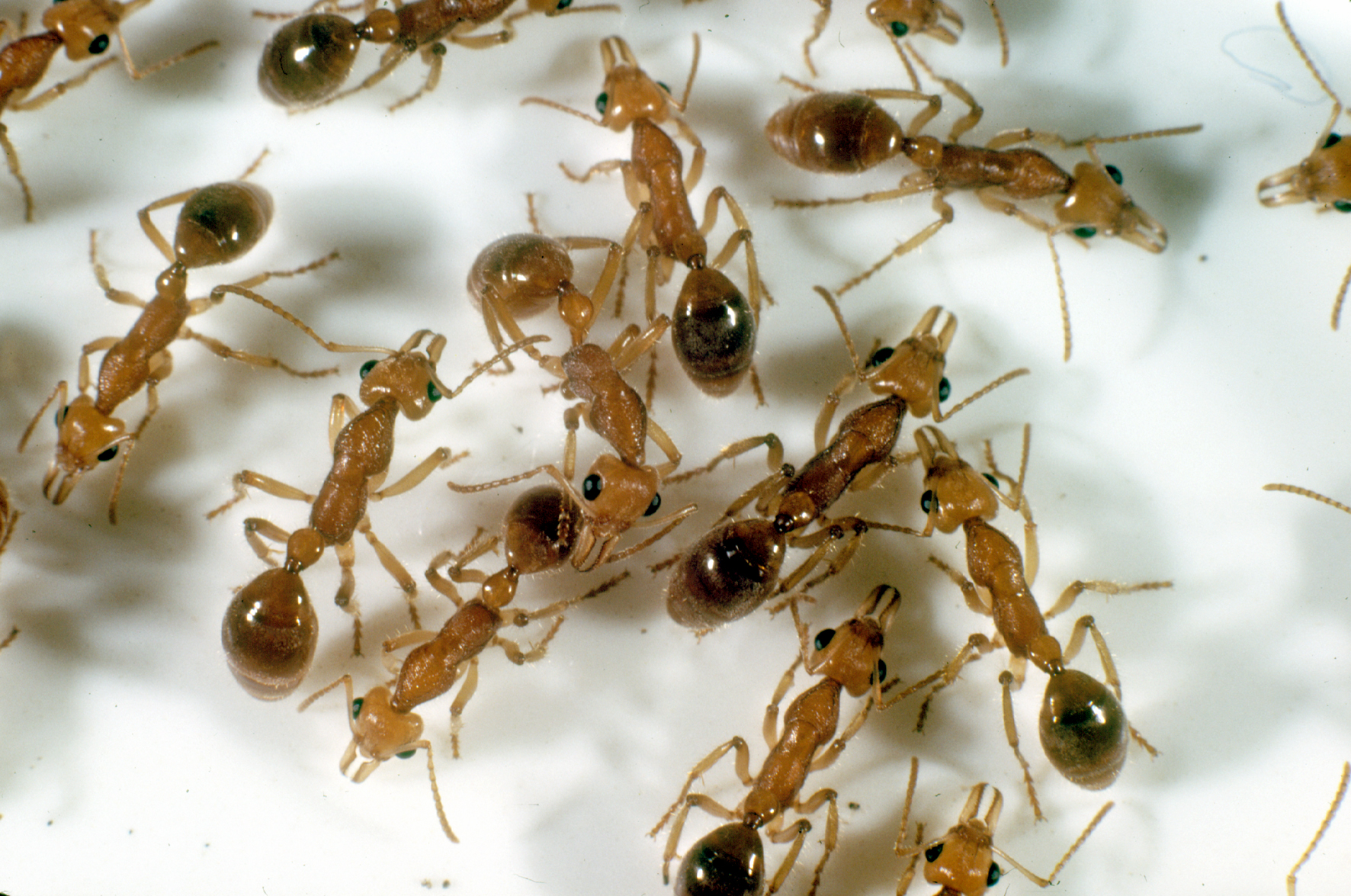
Nothomyrmecia macrops
Photo: Wikimedia Commons (CC) via https://en.wikipedia.org/wiki/Nothomyrmecia
Overview
Australian Ant (Nothomyrmecia macrops)
The Australian Ant, also known as the dinosaur ant, is a primitive species representing an ancient lineage that has remained largely unchanged for millions of years. Workers measure 9-11mm in length with distinctive large compound eyes, long mandibles, and a golden-brown coloration. Unlike most ants, Nothomyrmecia macrops is primarily nocturnal, foraging individually rather than in groups.
Workers hunt small arthropods and collect nectar, playing a role as both predator and pollinator in their ecosystem. Their primitive social structure and solitary foraging behavior provide valuable insights into ant evolution.
This species is endemic to South Australia, with confirmed populations restricted to small areas of mallee scrubland near Poochera on the Eyre Peninsula. The ants nest in sandy soil beneath shrubs, requiring specific temperature and moisture conditions. Their extremely limited geographic range makes them particularly vulnerable to environmental changes.
The primary threats include habitat destruction from agricultural expansion and land clearing for development. Climate change poses additional risks through altered precipitation patterns and temperature fluctuations that could disrupt their narrow environmental requirements. The species' restricted range means that localized disturbances could impact the entire population.
Conservation efforts focus on habitat protection and monitoring of known populations. Research continues into their ecology and distribution to identify potential additional colonies. Land management practices in occupied areas have been modified to minimize disturbance.
The species' outlook remains precarious due to its extremely limited range and ongoing habitat pressures. Without expanded protection measures and successful location of additional populations, Nothomyrmecia macrops faces continued risk of extinction.
Based on the available data, the specific threats facing the Australian Ant have not yet been formally assessed or documented by researchers. Without a proper threat assessment, it's unclear what particular dangers this species may be facing in its natural habitat. The status of threats to this species cannot be determined as increasing, stable, or decreasing due to the lack of available threat data.
Other threatened species in FORMICIDAE
Threatened in Australia
Frequently asked questions
Why is Nothomyrmecia macrops classified as Critically Endangered?
Where does Nothomyrmecia macrops live?
What are the main threats to Nothomyrmecia macrops?
Get weekly conservation intelligence
One short digest a week of the most striking species and country data we ship, plus breaking conservation news paired with our database where it matters.
Free, no spam. One-click unsubscribe in every email.