Pyrenula occidentalis
Local name: atlantisk vårtlav
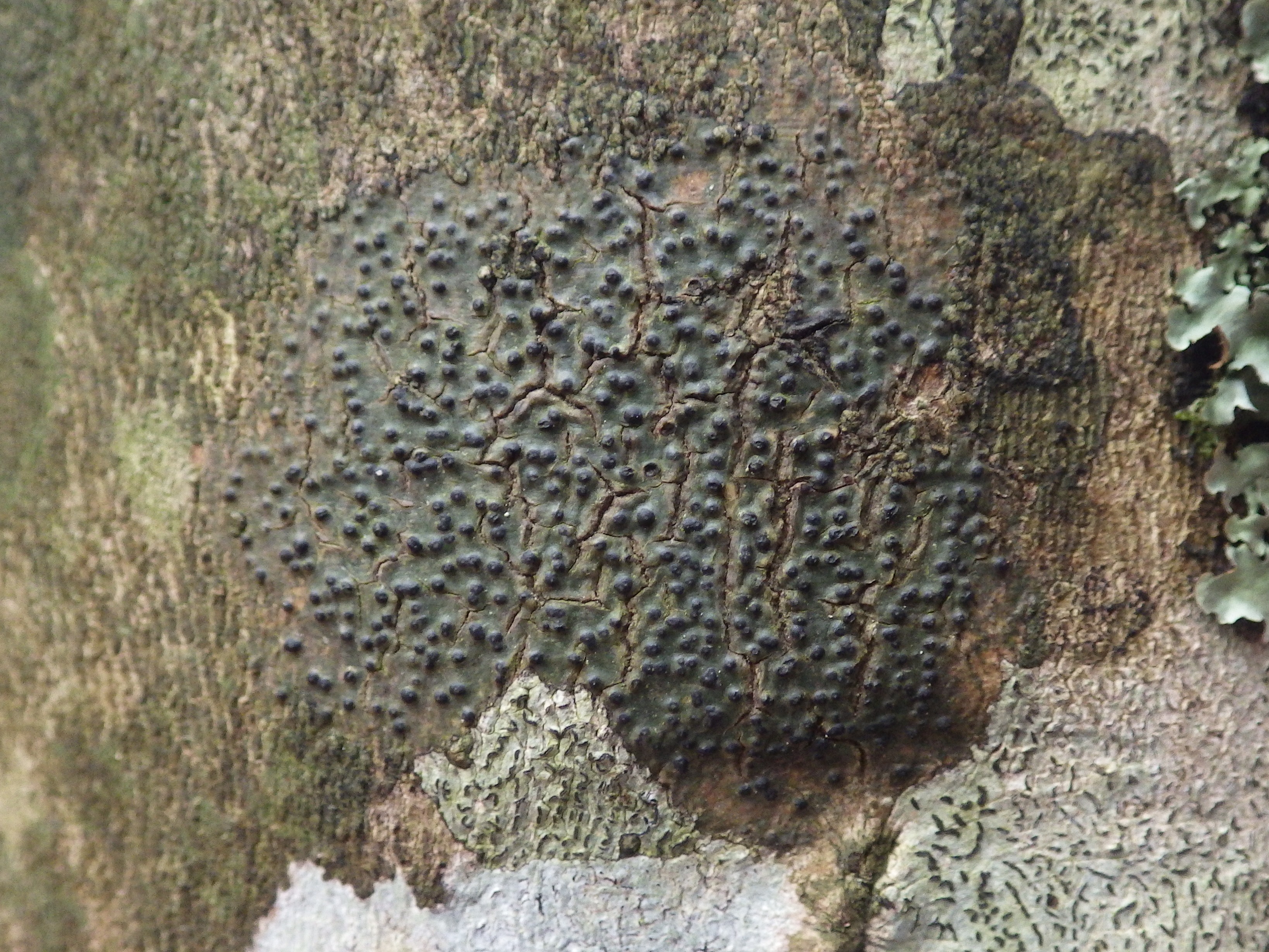
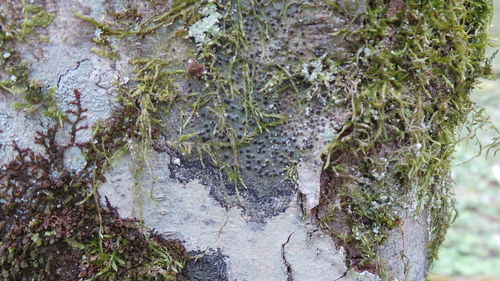
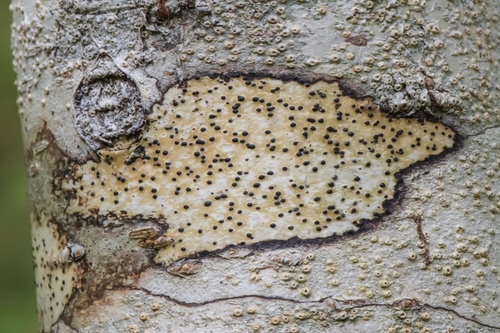
**Atlantisk vårtlav (Pyrenula occidentalis)** Pyrenula occidentalis, known as atlantisk vårtlav in Norwegian, is a crustose lichen species characterized by its thin, smooth thallus that forms patches on tree bark. This lichen develops small, black, wart-like fruiting bodies (perithecia) that give the species its distinctive appearance.
Photo: iNaturalist: (c) jcrivenaes, all rights reserved
Taxonomy & Classification
Kingdom
Fungi
Phylum
Ascomycota
Class
Eurotiomycetes
Order
Pyrenulales
Family
Pyrenulaceae
Genus
Pyrenula
Pyrenula occidentalis belongs to the family Pyrenulaceae, order Pyrenulales, within the Eurotiomycetes class.
Species Profile
**Atlantisk vårtlav (Pyrenula occidentalis)** Pyrenula occidentalis, known as atlantisk vårtlav in Norwegian, is a crustose lichen species characterized by its thin, smooth thallus that forms patches on tree bark. This lichen develops small, black, wart-like fruiting bodies (perithecia) that give the species its distinctive appearance. Like other lichens, it represents a symbiotic relationship between fungi and algae, playing a role in nutrient cycling and serving as a microhabitat for various invertebrates. This species occurs in Atlantic coastal regions, primarily inhabiting the bark of deciduous trees in humid, oceanic climates. Its distribution appears limited to specific coastal areas where maritime influence creates suitable microclimatic conditions. The lichen typically grows on smooth-barked trees in areas with high air humidity and minimal air pollution. The species' critically endangered status reflects its extreme rarity and restricted range. While specific threats have not been formally assessed, coastal lichens generally face pressures from habitat modification, air quality changes, and climate variability affecting the precise humidity and temperature conditions they require. Coastal development and changes in forest management practices may also impact suitable host trees. Current conservation measures for this species are not well-documented, reflecting the limited research attention many lichen species receive. The lack of comprehensive threat assessment and population monitoring represents a significant knowledge gap. The outlook for Pyrenula occidentalis remains uncertain due to insufficient data on population trends and specific threatening processes. Without targeted research and monitoring efforts, the species' conservation status cannot be adequately evaluated or improved.
The specific threats to atlantisk vårtlav (Pyrenula occidentalis) have not been assessed or documented by researchers. Without a proper threat assessment, it's unclear what factors may be putting this species at risk or affecting its populations. The status of threats to this species cannot be determined as increasing, stable, or decreasing due to the lack of available data.
Key Facts
Habitat & Distribution
Threats
IUCN Red List: Critically Endangered
The specific threats to atlantisk vårtlav (Pyrenula occidentalis) have not been assessed or documented by researchers. Without a proper threat assessment, it's unclear what factors may be putting this species at risk or affecting its populations. The status of threats to this species cannot be determined as increasing, stable, or decreasing due to the lack of available data.
Detailed threat classification data is sourced from IUCN assessments as they become available.
Community Sightings
Report a sightingNo community sightings yet. Be the first to report!
Sources & Attribution
How to Cite
IUCN: IUCN (2025). The IUCN Red List of Threatened Species. Version 2025-1. Available at: https://www.iucnredlist.org. doi:10.2305/IUCN.UK.2025-1.RLTS
GBIF: GBIF.org (2025). GBIF Home Page. Available at: https://www.gbif.org
This page: SpeciesRadar (2025). Pyrenula occidentalis (Pyrenula occidentalis). SpeciesRadar: Intelligence for Earth's Biodiversity. Available at: https://speciesradar.org/species/atlantisk-vartlav