Pyrenula coryli
Overview
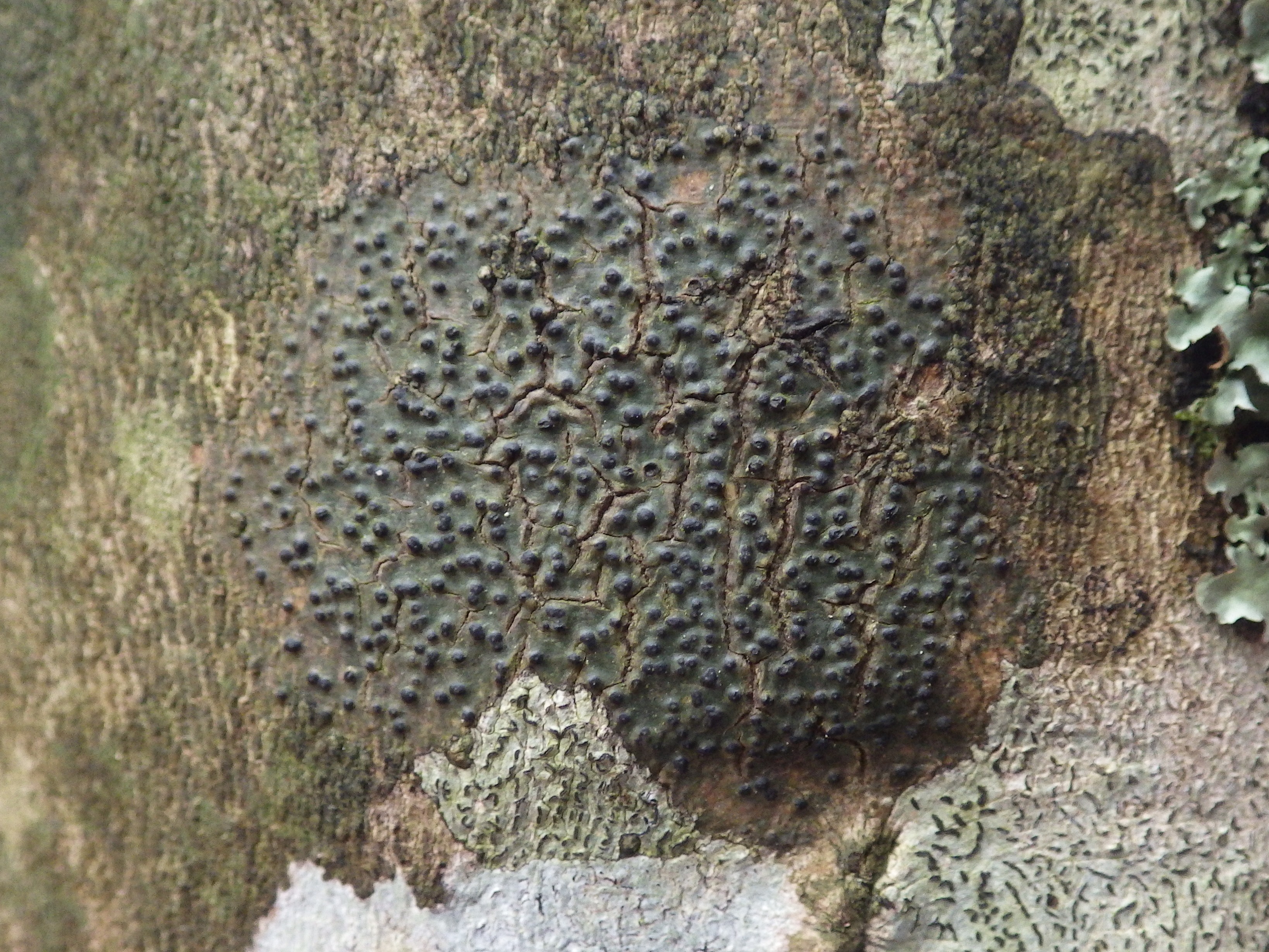
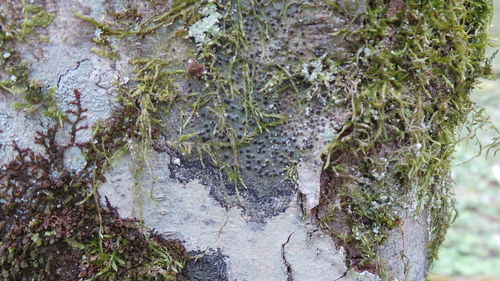
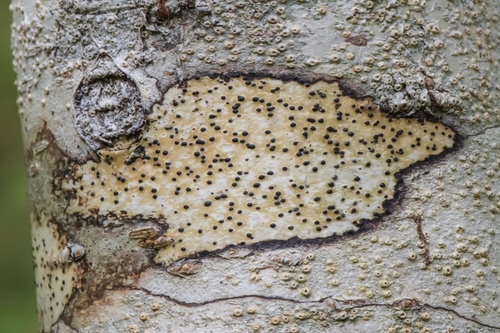
Pyrenula coryli, known as hasselvårtlav, is a crustose lichen species that forms thin, grayish to brownish crusts on bark surfaces. This inconspicuous lichen plays an important ecological role in forest ecosystems by contributing to nutrient cycling and providing microhabitat for small invertebrates. Its small, dark perithecia (fruiting bodies) are embedded in the thallus surface, making identification challenging without close examination.
Pyrenula coryli (hasselvårtlav) is critically endangered primarily due to habitat loss and degradation of old-growth deciduous forests, particularly those containing its preferred host trees. Air pollution and changes in forest management practices have severely reduced suitable habitat, while the species' extremely limited distribution makes it highly vulnerable to local extinctions.
Habitat
Hasselvårtlav grows exclusively on the smooth bark of mature deciduous trees, particularly favoring hazel (Corylus) species in old-growth and semi-natural woodland environments. It requires stable microclimatic conditions with consistent humidity levels and minimal air pollution, typically found in undisturbed forest interiors.
Other threatened species in Pyrenulaceae

Frequently asked questions
Why is Pyrenula coryli classified as Critically Endangered?
Where does Pyrenula coryli live?
What are the main threats to Pyrenula coryli?
Get weekly conservation intelligence
One short digest a week of the most striking species and country data we ship, plus breaking conservation news paired with our database where it matters.
Free, no spam. One-click unsubscribe in every email.