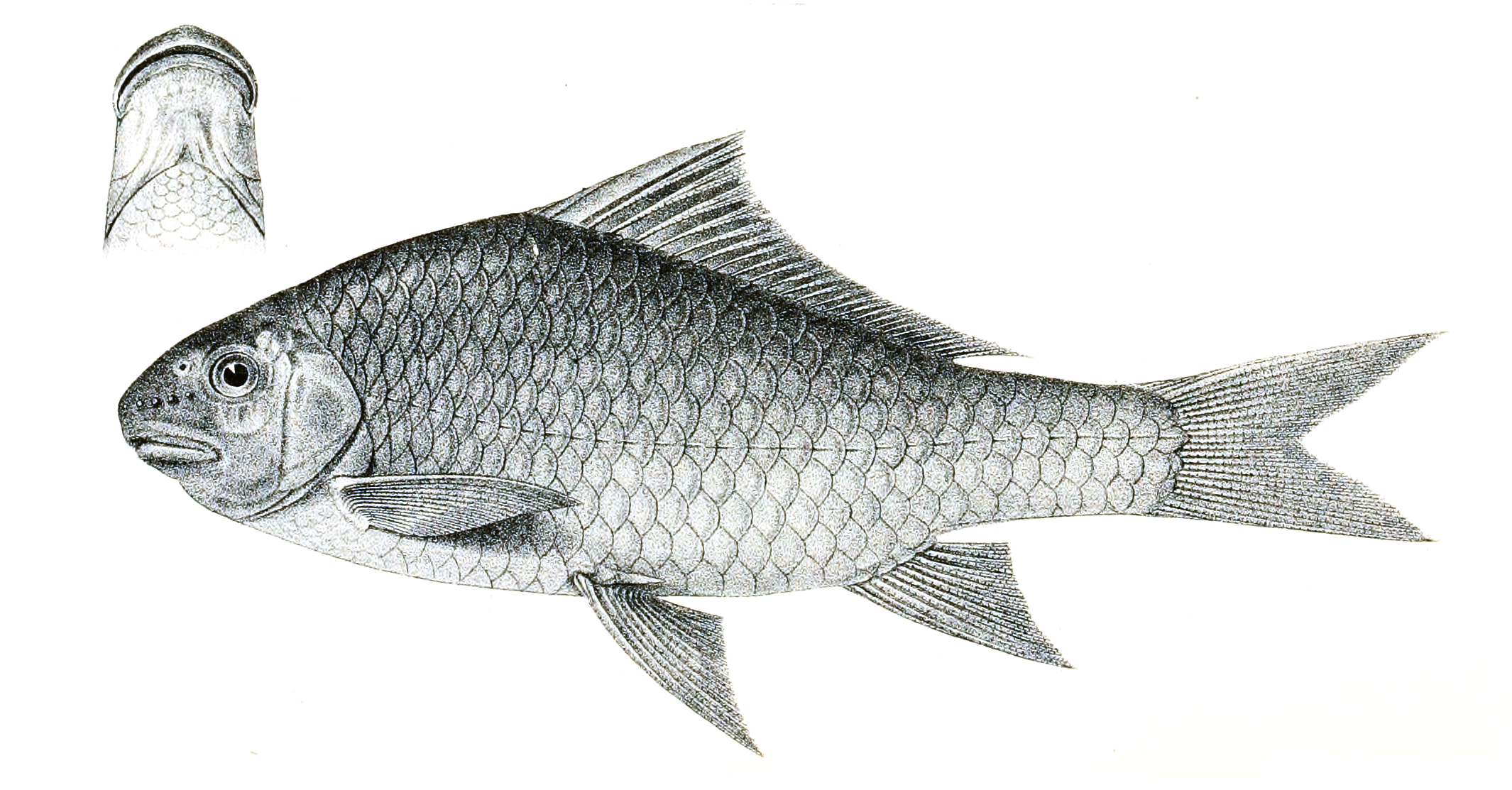
Cyprinion semiplotum
Photo: Wikimedia Commons (CC) via https://en.wikipedia.org/wiki/Assamese_kingfish
Overview
Assamese Kingfish (Cyprinion semiplotum)
The Assamese Kingfish is a freshwater cyprinid fish endemic to the Himalayan river systems of South Asia. This medium-sized fish typically displays a streamlined body adapted for life in flowing waters, with distinctive barbels that help it navigate and feed in turbid river conditions. As a bottom-dwelling species, it plays an important role in riverine ecosystems by processing organic matter and serving as prey for larger predatory fish and birds.
The species inhabits the river basins of northeastern India, Nepal, and Bhutan, particularly within the Brahmaputra and Ganges drainage systems. It prefers clear, fast-flowing streams and rivers with rocky or gravelly substrates at elevations ranging from lowland areas to mid-altitude zones in the Himalayan foothills.
The Assamese Kingfish faces mounting pressure from habitat degradation caused by dam construction, river channelization, and increased sedimentation from deforestation and agricultural runoff. Water pollution from industrial discharge and domestic waste further compromises water quality in its native rivers. Overfishing and the use of destructive fishing practices in some regions have also contributed to population declines.
Conservation efforts remain limited, with most protection occurring indirectly through broader watershed management initiatives and existing protected area networks that encompass portions of its range. Some regional fisheries departments have begun monitoring programs, though comprehensive population assessments are lacking.
The species' future remains uncertain due to continued habitat pressures and insufficient population data. Without targeted conservation measures addressing specific threats to Himalayan river ecosystems, the Assamese Kingfish's vulnerable status may deteriorate further.
The Assamese Kingfish faces significant population declines primarily due to habitat degradation from dam construction, water pollution, and overfishing throughout its range in South Asian river systems. Climate change and altered flow regimes from hydroelectric projects further threaten the species' spawning and feeding habitats.
Habitat
Other threatened species in Cyprinidae


Threatened in Bhutan


Frequently asked questions
Why is Cyprinion semiplotum classified as Vulnerable?
Where does Cyprinion semiplotum live?
What are the main threats to Cyprinion semiplotum?
Get weekly conservation intelligence
One short digest a week of the most striking species and country data we ship, plus breaking conservation news paired with our database where it matters.
Free, no spam. One-click unsubscribe in every email.