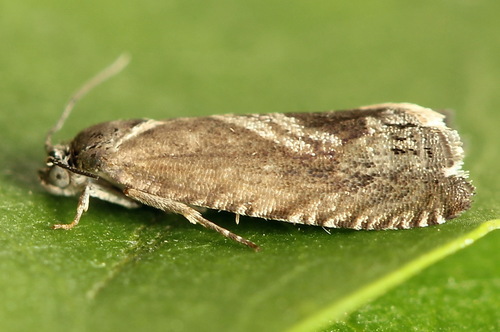
Cydia cornucopiae
Photo: iNaturalist: (c) Andrey Ponomarev, some rights reserved (CC BY-NC), uploaded by Andrey Ponomarev
Overview
Cydia cornucopiae, known as aspskogsvecklare, is a small moth species in the family Tortricidae with distinctive mottled brown and gray wing patterns that provide excellent camouflage against tree bark. As a specialized herbivore, this species plays an important ecological role in forest ecosystems by contributing to nutrient cycling and serving as prey for insectivorous birds and other predators.
Cydia cornucopiae is declining primarily due to habitat loss from deforestation and forest fragmentation in its native European range. The species is particularly vulnerable because of its specialized relationship with specific host trees and its limited dispersal ability.
Habitat
This species inhabits mature deciduous and mixed forests, particularly those dominated by aspen (Populus) species where it completes its larval development. The moths require forest environments with diverse understory vegetation and minimal human disturbance to maintain stable breeding populations.
Other threatened species in Tortricidae


Threatened in Canada
Frequently asked questions
Why is Cydia cornucopiae classified as Endangered?
Where does Cydia cornucopiae live?
What are the main threats to Cydia cornucopiae?
Get weekly conservation intelligence
One short digest a week of the most striking species and country data we ship, plus breaking conservation news paired with our database where it matters.
Free, no spam. One-click unsubscribe in every email.