
Ashen Knight
Tricholoma virgatum
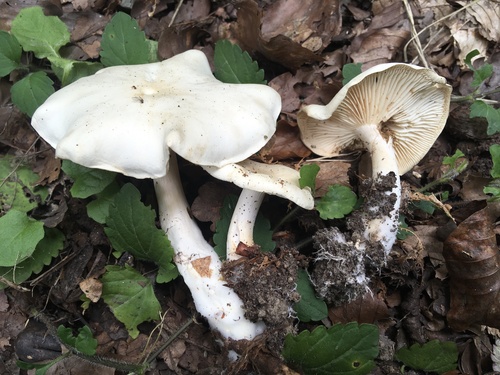
Photo: Photo: Wikimedia Commons, CC BY-SA
Overview
The Ashen Knight (Tricholoma virgatum) is a distinctive mushroom species belonging to the Tricholomataceae family, characterized by its pale gray to ashen-colored cap that typically measures 4-8 centimeters in diameter. The cap surface displays a silky, fibrillose texture with darker radial streaks, while the white to pale gray gills are closely spaced and attached to the stem. The sturdy white stem often shows a slight bulbous base and can reach heights of 6-12 centimeters.
This saprotrophic fungus forms mycorrhizal associations with deciduous trees, particularly beech and oak species, playing a crucial ecological role in forest nutrient cycling. The Ashen Knight inhabits mature deciduous and mixed woodlands across limited regions of temperate Europe, with confirmed populations in ancient forest systems of central and eastern European countries. The species typically fruits during late summer to early autumn, emerging from rich humus layers in undisturbed forest floors.
Currently classified as Critically Endangered (CR) by the IUCN, Tricholoma virgatum faces severe population declines due to habitat fragmentation and forest management practices. Despite its precarious status, recent mycological surveys have identified several previously unknown populations in protected forest reserves, offering hope for targeted conservation efforts. The species serves as an important indicator of old-growth forest health, and its presence signals high-quality woodland ecosystems that support diverse fungal communities.
The primary threat to Tricholoma virgatum stems from intensive forestry practices that remove the mature deciduous trees essential for its mycorrhizal partnerships, particularly the selective harvesting of ancient beech and oak stands. Forest fragmentation has isolated remaining populations, reducing genetic diversity and limiting spore dispersal between suitable habitats. Additionally, soil compaction from heavy machinery and recreational activities disrupts the delicate hyphal networks that the species requires for nutrient exchange with host trees.
Habitat
Tricholoma virgatum exclusively inhabits mature deciduous and mixed forests with well-developed humus layers, showing strong preference for undisturbed beech-oak woodland systems. The species requires stable soil conditions and established mycorrhizal networks, typically occurring in forest areas that have remained undisturbed for several decades.
Other threatened species in Tricholomataceae


Frequently asked questions
Why is Ashen Knight classified as Critically Endangered?
Where does Ashen Knight live?
What are the main threats to Ashen Knight?
Get weekly conservation intelligence
One short digest a week of the most striking species and country data we ship, plus breaking conservation news paired with our database where it matters.
Free, no spam. One-click unsubscribe in every email.