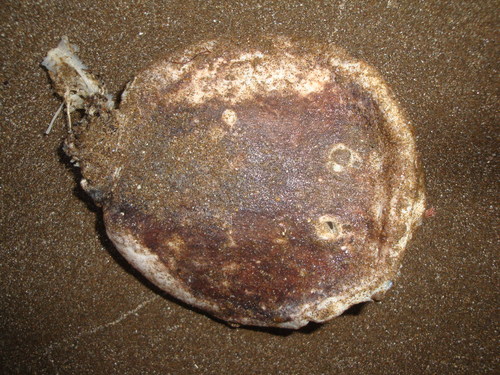
Argentine Torpedo
Tetronarce puelcha
Photo: Photo: (c) Nicolas Olejnik, some rights reserved (CC BY), uploaded by Nicolas Olejnik
Overview
Tetronarce puelcha, commonly known as the Puelche electric ray, is a cartilaginous fish species endemic to the southwestern Atlantic Ocean. This electric ray inhabits the continental shelf waters off Argentina and Uruguay, typically found at depths ranging from shallow coastal areas to deeper offshore waters. The species belongs to the family Torpedinidae and possesses specialized electric organs capable of generating electrical discharges for prey capture and defense.
Like other electric rays, T. puelcha has a flattened, disc-shaped body adapted for a benthic lifestyle on sandy and muddy substrates. The species faces severe population declines primarily due to fishing pressure, both as targeted catch and bycatch in commercial fisheries operating within its limited range.
Bottom trawling activities pose a particular threat to this demersal species, as the fishing gear directly impacts the seafloor habitats where these rays reside. The restricted geographic distribution of T. puelcha makes the species particularly vulnerable to localized threats and environmental changes.
Climate change and associated shifts in ocean conditions may further impact the species' habitat suitability and prey availability. Currently, there is limited specific conservation action for this species, though it may benefit from broader marine protected area designations and fisheries management measures within its range. Enhanced monitoring and research efforts are needed to better understand population status and implement targeted conservation strategies for this critically endangered electric ray.
Tetronarce puelcha faces severe threats from commercial fishing activities, including both targeted fishing and incidental capture as bycatch in bottom trawl fisheries. The species' limited geographic range in the southwestern Atlantic makes it particularly vulnerable to localized fishing pressure and habitat degradation from trawling activities.
Habitat
This species inhabits continental shelf waters of the southwestern Atlantic Ocean, primarily off the coasts of Argentina and Uruguay. It typically occurs on sandy and muddy bottom substrates from shallow coastal waters to deeper offshore areas.
Conservation measures underway
Other threatened species in TORPEDINIDAE
Threatened in Argentina

Frequently asked questions
Why is Argentine Torpedo classified as Critically Endangered?
Where does Argentine Torpedo live?
What are the main threats to Argentine Torpedo?
Get weekly conservation intelligence
One short digest a week of the most striking species and country data we ship, plus breaking conservation news paired with our database where it matters.
Free, no spam. One-click unsubscribe in every email.