
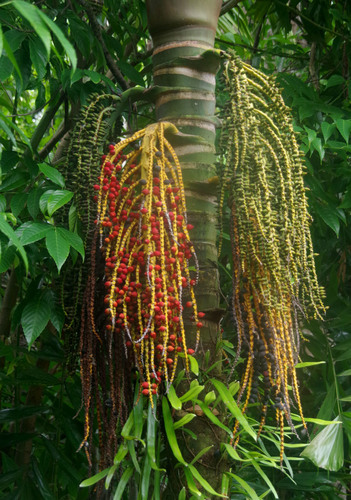
Areca concinna
Photo: Wikimedia Commons (CC) via https://en.wikipedia.org/wiki/Areca_concinna
Overview
A detailed profile for this species is sourced from the IUCN Red List of Threatened Species as assessments become available.
Areca concinna faces severe pressure from deforestation and agricultural conversion throughout its native range in Southeast Asia. Palm harvesting for ornamental trade has intensified collection pressure on remaining wild populations. Habitat fragmentation isolates small populations, reducing genetic diversity and limiting natural regeneration in degraded forest patches.
Habitat
This palm species inhabits tropical lowland rainforests and secondary forest margins in Southeast Asia, typically growing in well-drained soils at elevations below 500 meters. It occurs naturally in forest understory and edge habitats where it benefits from partial shade and high humidity conditions.
Other threatened species in ARECACEAE
Threatened in Sri Lanka

Frequently asked questions
Why is Areca concinna classified as Endangered?
Where does Areca concinna live?
What are the main threats to Areca concinna?
Get weekly conservation intelligence
One short digest a week of the most striking species and country data we ship, plus breaking conservation news paired with our database where it matters.
Free, no spam. One-click unsubscribe in every email.