
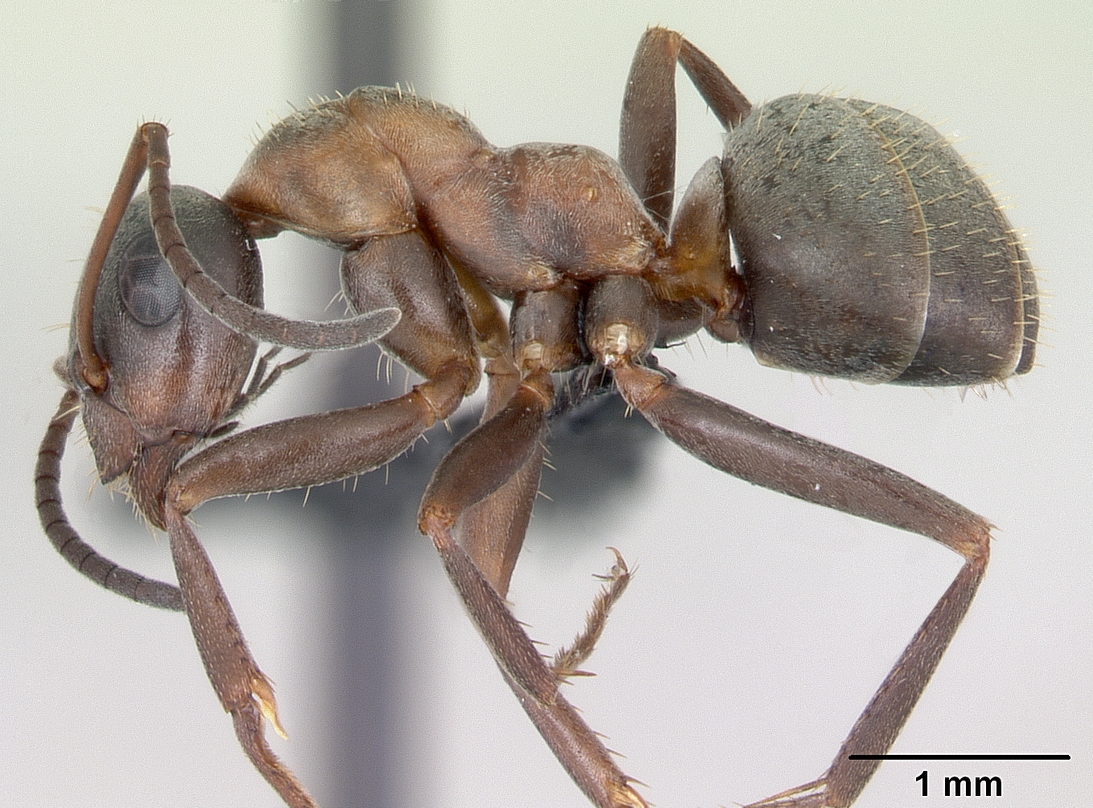
Antichthonidris bidentata
Photo: Wikimedia Commons (CC) via https://en.wikipedia.org/wiki/Monomorium_bidentatum
Overview
A detailed profile for this species is sourced from the IUCN Red List of Threatened Species as assessments become available.
Antichthonidris bidentata faces significant pressure from habitat degradation in its restricted range within Australian temperate forests. Urban expansion and agricultural conversion have fragmented the specialized soil microhabitats this ant species requires for nesting and foraging. Climate change poses additional risks through altered precipitation patterns that could disrupt the delicate moisture balance of forest floor ecosystems where these ants establish their colonies.
Habitat
This species inhabits temperate forest floors in southeastern Australia, particularly favoring areas with well-drained soils and moderate canopy cover. The ants construct small colonies in leaf litter and upper soil layers where they can access their preferred prey of small arthropods and organic matter.
Other threatened species in Formicidae

Threatened in Argentina

Frequently asked questions
Why is Antichthonidris bidentata classified as Vulnerable?
Where does Antichthonidris bidentata live?
What are the main threats to Antichthonidris bidentata?
Get weekly conservation intelligence
One short digest a week of the most striking species and country data we ship, plus breaking conservation news paired with our database where it matters.
Free, no spam. One-click unsubscribe in every email.