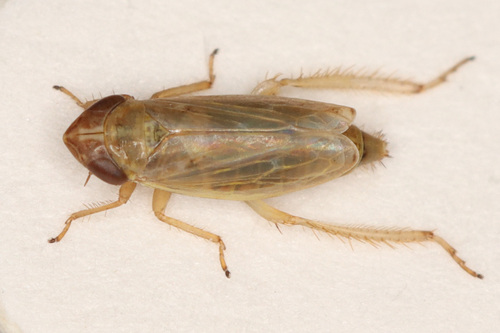
Psammotettix putoni
Photo: iNaturalist: (c) Marco de Haas, all rights reserved, uploaded by Marco de Haas
Overview
Psammotettix putoni is a small leafhopper species belonging to the Cicadellidae family, characterized by its pale coloration and distinctive wing markings. These tiny insects typically measure 3-4mm in length and play an important ecological role as herbivores feeding on grass species while serving as prey for various arthropod predators and contributing to nutrient cycling in grassland ecosystems.
Psammotettix putoni faces significant threats from habitat loss and degradation due to agricultural intensification and urbanization of grassland ecosystems. Climate change and altered precipitation patterns further threaten the specialized grass communities this leafhopper depends on for survival and reproduction.
Habitat
Inhabits dry grasslands, meadows, and steppe environments, particularly areas with sparse vegetation and sandy soils. Shows preference for open habitats with specific grass species that serve as host plants for feeding and reproduction.
Other threatened species in Cicadellidae
Threatened in Austria
Frequently asked questions
Why is Psammotettix putoni classified as Vulnerable?
Where does Psammotettix putoni live?
What are the main threats to Psammotettix putoni?
Get weekly conservation intelligence
One short digest a week of the most striking species and country data we ship, plus breaking conservation news paired with our database where it matters.
Free, no spam. One-click unsubscribe in every email.