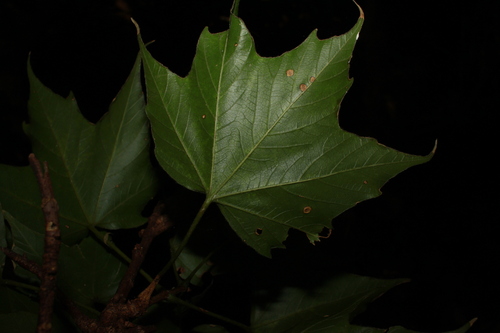
Acer amamiense
Photo: Photo: (c) Bridelia, all rights reserved, uploaded by Bridelia
Overview
A detailed profile for this species is sourced from the IUCN Red List of Threatened Species as assessments become available.
Acer amamiense is a maple species restricted to Amami Ōshima and a small number of other Ryukyu Islands in Japan, where it survives in only a handful of fragmented subpopulations within remnant subtropical forest. Its extremely limited range makes it acutely vulnerable to logging, typhoon damage, and small-scale land conversion, while its low overall population size increases the risk of genetic erosion and stochastic extinction events. As a Critically Endangered species with few mature individuals, even localized disturbance to remaining forest patches poses a disproportionate threat to its long-term survival.
Habitat
This species occupies humid subtropical evergreen broadleaf forest at low to mid elevations on the Ryukyu Islands, typically in valley and ravine microhabitats with high moisture retention.
Conservation measures underway
Other threatened species in SAPINDACEAE
Threatened in Japan

Frequently asked questions
Why is Acer amamiense classified as Critically Endangered?
Where does Acer amamiense live?
What are the main threats to Acer amamiense?
Get weekly conservation intelligence
One short digest a week of the most striking species and country data we ship, plus breaking conservation news paired with our database where it matters.
Free, no spam. One-click unsubscribe in every email.