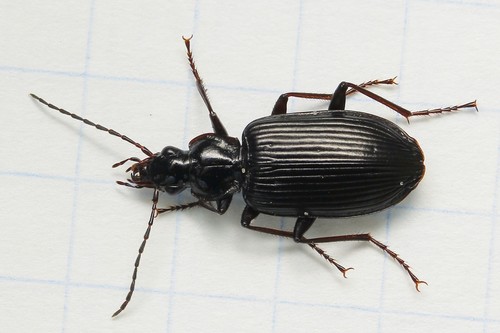
Platynus longiventris
Photo: iNaturalist: no rights reserved, uploaded by Иван Пристрем
Overview
The älvängslöpare (Platynus longiventris) is a critically endangered ground beetle endemic to Sweden, representing one of Europe's most threatened carabid species. This distinctive beetle measures approximately 8-10 millimeters in length, displaying the characteristic elongated body typical of Platynus species, with a dark metallic bronze to black coloration and prominent mandibles adapted for predation. The species inhabits specialized riparian environments along pristine river systems in central Sweden, particularly favoring areas with stable gravel substrates, sparse vegetation cover, and seasonal flooding regimes that create the specific microhabitat conditions essential for its survival.
Historically documented from several river valleys, current populations are restricted to fragmentary locations along the Dalälven River system and possibly one or two tributaries in Gävleborg County. As a predatory beetle, P. longiventris plays a crucial ecological role in riparian food webs, hunting smaller invertebrates during nocturnal foraging periods and likely contributing to nutrient cycling between aquatic and terrestrial ecosystems.
The species exhibits strong site fidelity, with adults remaining within narrow zones of optimal habitat throughout their lifecycle. Its classification as Critically Endangered reflects severe population declines and habitat fragmentation over recent decades. However, recent collaborative efforts between Swedish conservation authorities and local landowners have established protective buffer zones along key river stretches, and specialized habitat restoration techniques developed for riparian carabids show promising early results in creating suitable conditions for potential population recovery.
The älvängslöpare faces severe threats from hydroelectric development and river regulation, which alter the natural flooding cycles and sediment deposition patterns essential for maintaining its specialized gravel bar habitats. Agricultural intensification along river corridors has eliminated riparian buffer zones and introduced pesticide contamination that directly impacts both the beetle and its invertebrate prey base. Climate change compounds these pressures by altering precipitation patterns and increasing the frequency of extreme flooding events that can wash away the stable substrate formations where breeding occurs.
Habitat
This species requires undisturbed riparian zones along medium-sized rivers with natural flow regimes, specifically inhabiting exposed gravel and sand bars that experience periodic but predictable flooding. The beetles depend on areas where fine sediments accumulate among larger stones, creating the precise moisture and temperature conditions necessary for larval development and adult overwintering.
Other threatened species in Carabidae

Frequently asked questions
Why is Platynus longiventris classified as Critically Endangered?
Where does Platynus longiventris live?
What are the main threats to Platynus longiventris?
Get weekly conservation intelligence
One short digest a week of the most striking species and country data we ship, plus breaking conservation news paired with our database where it matters.
Free, no spam. One-click unsubscribe in every email.