
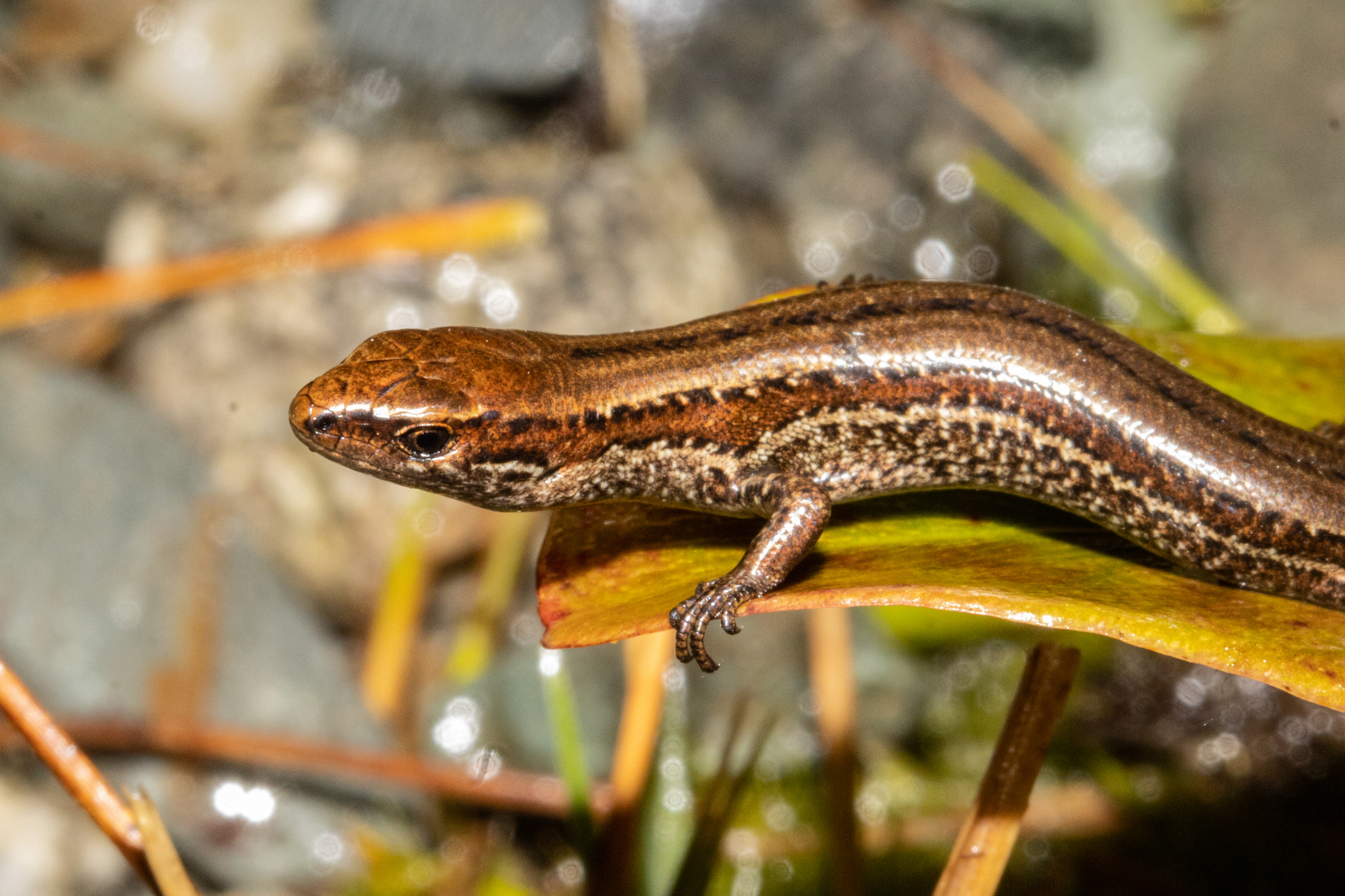
Alpine She-Oak Slender Bluetongue
Cyclodomorphus praealtus
Photo: Wikimedia Commons (CC) via https://en.wikipedia.org/wiki/Alpine_she-oak_slender_bluetongue
Overview
Cyclodomorphus praealtus is a moderately sized skink characterised by a smooth, glossy body, reduced limbs, and a long tail relative to its body length, features typical of its genus. Like other slender bluetongues, it is likely secretive and slow-moving, sheltering beneath tussocks, rocks, and woody debris, and it is thought to feed on invertebrates and plant material. As a ground-dwelling reptile within grassland ecosystems, it likely contributes to invertebrate population regulation and serves as prey for birds and mammals.
The species is restricted to high-elevation grasslands and heathlands in southeastern Australia, particularly the Australian Alps region spanning parts of Victoria and New South Wales. Its habitat consists of montane and subalpine tussock grasslands, often in areas subject to seasonal snow cover.
Its restricted, fragmented distribution makes it highly vulnerable to multiple concurrent pressures. Livestock grazing degrades tussock grassland structure, while tourism and recreational infrastructure fragment habitat in alpine resort areas. Roads increase mortality risk and habitat severance.
Altered fire regimes, including both wildfire and fire suppression practices, disrupt vegetation structure critical for shelter. Water management and dam projects have modified hydrology in some montane catchments, and invasive species, including predators and competing organisms, add further pressure. Climate-driven habitat shifts threaten to compress the already limited alpine zone this species depends upon.
Conservation efforts include habitat protection within national parks and alpine reserves, monitoring programs to track population trends, and research into grazing and fire management practices compatible with grassland conservation. Invasive species control programs in alpine parks also indirectly benefit this species.
Population trends are currently decreasing, and the species remains classified as Endangered. Continued habitat pressure and climate change effects on alpine environments suggest ongoing conservation attention will be necessary to prevent further decline.
This alpine skink's mountain habitat is being squeezed by ski resorts and tourism development, livestock grazing, and roads cutting through its range, while dams and water management projects alter the wet areas it depends on. It also faces danger from changing fire patterns (both wildfires and fire control measures), logging operations, invasive species like predators or competing animals, and broader shifts in its habitat due to environmental change. Since all of these pressures are currently ongoing and active, the overall threat level appears to be stable to intensifying rather than easing.
Habitat
Conservation measures underway
Other threatened species in SCINCIDAE

Threatened in Australia
Frequently asked questions
Why is Alpine She-Oak Slender Bluetongue classified as Endangered?
Where does Alpine She-Oak Slender Bluetongue live?
What are the main threats to Alpine She-Oak Slender Bluetongue?
Get weekly conservation intelligence
One short digest a week of the most striking species and country data we ship, plus breaking conservation news paired with our database where it matters.
Free, no spam. One-click unsubscribe in every email.