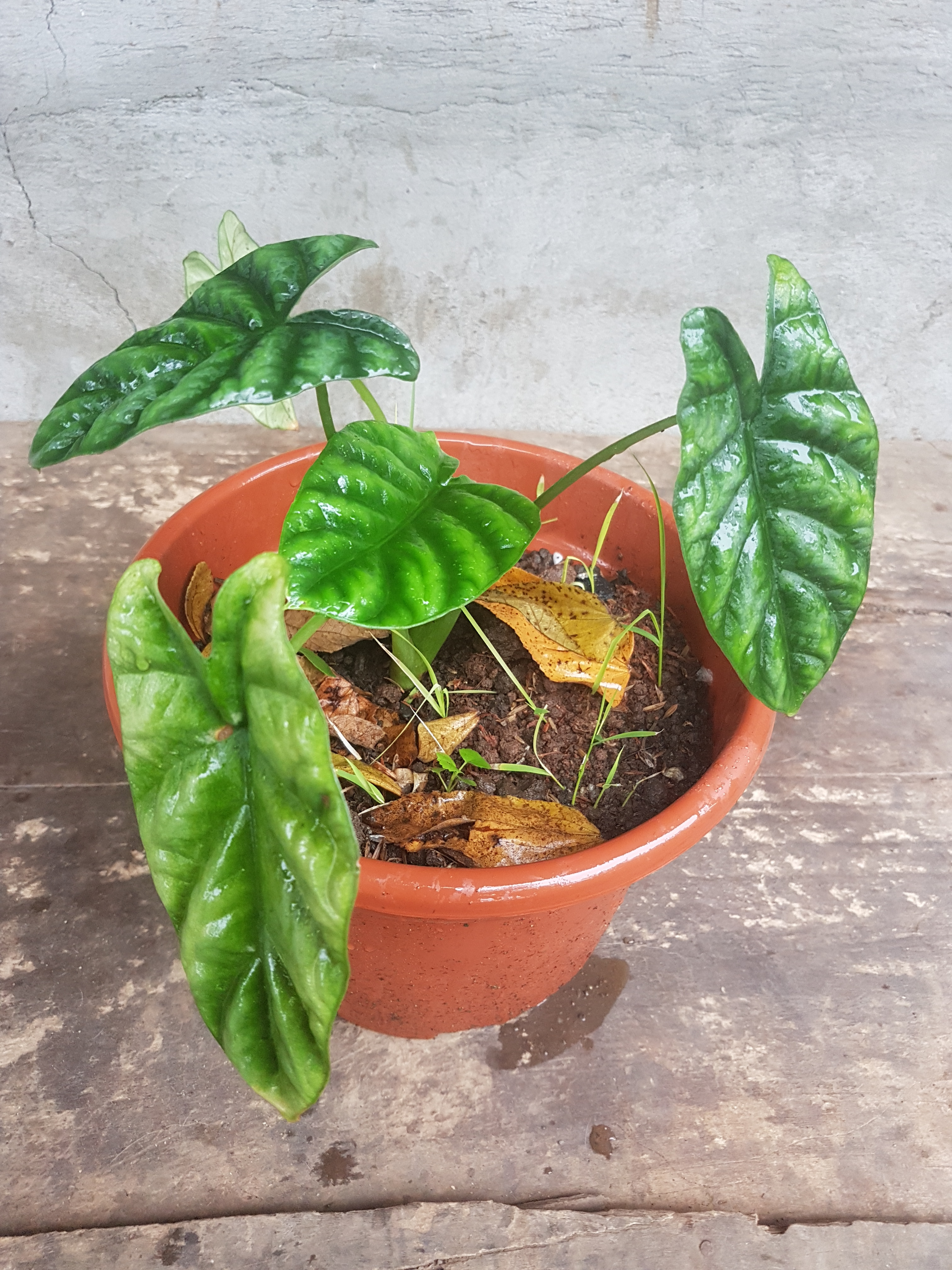
Alocasia Quilted Dreams
Alocasia sinuata
Photo: Photo: Wikimedia Commons, CC BY-SA
Overview
Alocasia sinuata is a critically endangered aroid endemic to the tropical rainforests of Southeast Asia, distinguished by its distinctive deeply lobed leaves with pronounced sinuate margins that give the species its scientific name. This herbaceous perennial belongs to the diverse Alocasia genus within the Araceae family, characterized by its broad, arrow-shaped foliage that displays prominent venation patterns and a glossy dark green surface. The plant typically reaches heights of 60-90 centimeters, producing the characteristic spathe and spadix inflorescence common to aroids.
Native to lowland and hill dipterocarp forests, A. sinuata thrives in the humid understory environment where filtered sunlight penetrates the forest canopy, requiring consistently moist, well-draining soils rich in organic matter. The species has an extremely restricted geographic range, found only in specific forest fragments within its native habitat, making it particularly vulnerable to environmental changes.
Currently classified as Critically Endangered by the IUCN, A. sinuata faces severe population decline due to ongoing deforestation and habitat fragmentation throughout its limited range. The species exhibits the typical aroid reproductive strategy, with populations maintained through both sexual reproduction via the spadix inflorescence and vegetative propagation through underground rhizomes.
Encouragingly, recent botanical surveys have identified several previously unknown populations in protected forest reserves, and the species has shown positive response to habitat restoration efforts in degraded forest margins. Ex-situ conservation programs at specialized botanical gardens have successfully maintained breeding populations, providing crucial genetic material for potential future reintroduction programs.
Alocasia sinuata faces imminent extinction primarily due to rapid deforestation for palm oil plantations and agricultural conversion within its extremely limited native range. The species' dependence on specific microclimate conditions in undisturbed forest understory makes it particularly vulnerable to habitat fragmentation, as even small clearings can alter the humidity and light levels essential for survival. Additionally, illegal collection for the international ornamental plant trade has significantly impacted wild populations, with collectors targeting this rare species for private collections and commercial propagation.
Habitat
Alocasia sinuata inhabits the humid understory of lowland and hill dipterocarp forests in Southeast Asia, typically growing at elevations between 200-800 meters above sea level. The species requires the specific microclimate conditions found in undisturbed primary forest, including consistent high humidity, filtered sunlight, and nutrient-rich soils with excellent drainage.
Other threatened species in ARACEAE
Threatened in Philippines

Frequently asked questions
Why is Alocasia Quilted Dreams classified as Critically Endangered?
Where does Alocasia Quilted Dreams live?
What are the main threats to Alocasia Quilted Dreams?
Get weekly conservation intelligence
One short digest a week of the most striking species and country data we ship, plus breaking conservation news paired with our database where it matters.
Free, no spam. One-click unsubscribe in every email.