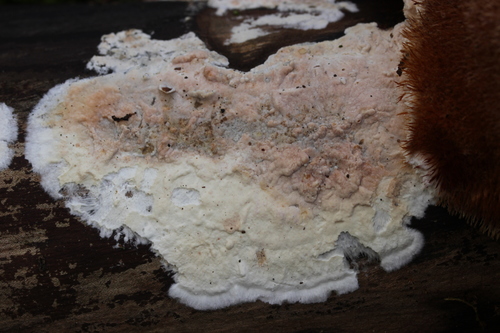
Granulobasidium vellereum
Photo: iNaturalist: (c) Björn Sothmann, some rights reserved (CC BY-SA), uploaded by Björn Sothmann
Overview
Granulobasidium vellereum is a species of fungus in the family Cyphellaceae. A plant pathogen associated with white rot of angiospermous logs, slash, and living trees, it has been found in Sweden and Denmark, and in North America. Originally described as Corticium vellereum in 1885, it was transferred to the genus Granulobasidium by Walter Jülich in 1979.
Granulobasidium vellereum faces significant threats from habitat degradation and loss of suitable substrate trees due to deforestation and forest fragmentation. Climate change may also be altering the moisture and temperature conditions this fungal species requires for successful reproduction and survival.
Habitat
This fungal species typically inhabits temperate and boreal forests, growing as a wood-decomposing organism on dead and decaying hardwood trees, particularly in moist forest environments with stable humidity levels.
Other threatened species in Cyphellaceae
Threatened in Åland Islands


Frequently asked questions
Why is Granulobasidium vellereum classified as Vulnerable?
Where does Granulobasidium vellereum live?
What are the main threats to Granulobasidium vellereum?
Get weekly conservation intelligence
One short digest a week of the most striking species and country data we ship, plus breaking conservation news paired with our database where it matters.
Free, no spam. One-click unsubscribe in every email.