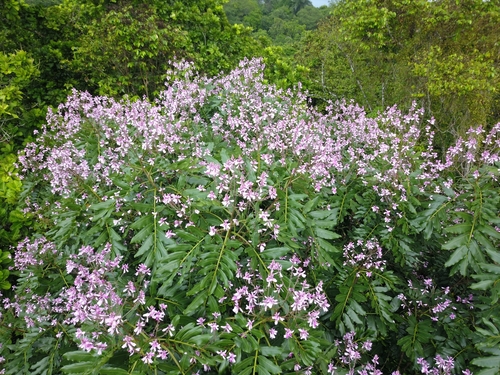
Dipteryx oleifera
Photo: iNaturalist: (c) Ennio Arcia, some rights reserved (CC BY-NC), uploaded by Ennio Arcia
Overview
Dipteryx oleifera, the tonka bean, eboe, choibá, or almendro tree, is a species of emergent rainforest tree up to 55 m (180 ft) tall in the family Fabaceae, native to Honduras, Nicaragua, Costa Rica, Panama, Colombia, and Ecuador.
Almendro faces significant pressure from widespread deforestation and habitat fragmentation across its Central American range, driven by agricultural expansion, cattle ranching, and logging operations. The species' slow growth rate and specific habitat requirements make it particularly vulnerable to these ongoing threats, while its valuable timber and seeds create additional harvesting pressure.
Habitat
Almendro occurs in tropical moist lowland forests and premontane forests from sea level to approximately 1,000 meters elevation. The species typically grows in primary and mature secondary forests with well-drained soils, often found along rivers and in areas with high rainfall throughout Central America from Nicaragua to Colombia.
Other threatened species in Fabaceae

Frequently asked questions
Why is Dipteryx oleifera classified as Vulnerable?
Where does Dipteryx oleifera live?
What are the main threats to Dipteryx oleifera?
Get weekly conservation intelligence
One short digest a week of the most striking species and country data we ship, plus breaking conservation news paired with our database where it matters.
Free, no spam. One-click unsubscribe in every email.