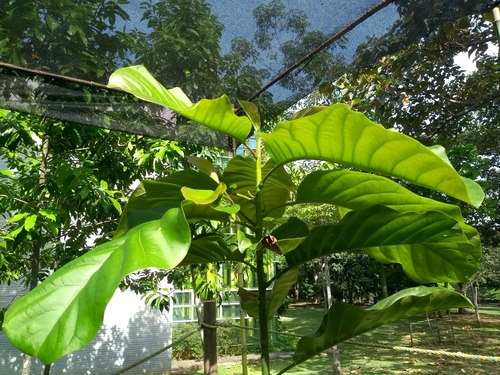
CRCritically Endangered
Magnolia katiorum
Declining
Photo: Photo: (c) Ana Maria Benavides, some rights reserved (CC BY-NC), uploaded by Ana Maria Benavides
Overview
A detailed profile for this species is sourced from the IUCN Red List of Threatened Species as assessments become available.
Habitat
This species inhabits pristine cloud forests at elevations between 1,200-1,800 meters, where persistent mist and high humidity create ideal growing conditions. It requires well-drained, organic-rich soils and partial canopy cover provided by the surrounding montane forest ecosystem.
Forest· major
Conservation measures underway
Ex-situ conservationAwareness & communications
Other threatened species in MAGNOLIACEAE
Threatened in Colombia
Frequently asked questions
Why is Magnolia katiorum classified as Critically Endangered?
Magnolia katiorum is classified as Critically Endangered — facing an extremely high risk of extinction in the wild — because population sizes are very small, declining sharply, or restricted to a tiny range, per the IUCN Red List assessment recorded in the SpeciesRadar database.
Where does Magnolia katiorum live?
Magnolia katiorum occurs in Colombia. Country-level distribution data is sourced from the IUCN Red List and cross-referenced with GBIF occurrences.
What are the main threats to Magnolia katiorum?
The main threats to Magnolia katiorum are 1.1, 2.3, 4.1, and 5.3. The full IUCN-classified threat record for this species is detailed on the species page.
Get weekly conservation intelligence
One short digest a week of the most striking species and country data we ship, plus breaking conservation news paired with our database where it matters.
Free, no spam. One-click unsubscribe in every email.