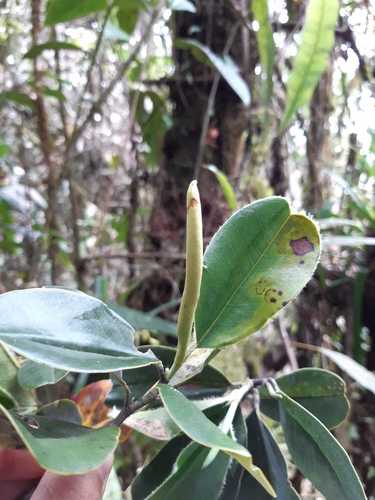
Magnolia coronata
Photo: Photo: (c) Apipa, some rights reserved (CC BY-NC), uploaded by Apipa
Overview
Magnolia coronata stands as one of the world's most critically endangered flowering trees, classified as Critically Endangered (CR) by the IUCN. This magnificent magnolia species is endemic to the cloud forests of southeastern Mexico, where it grows at elevations between 1,800 and 2,400 meters in the Sierra Madre Oriental. The tree reaches heights of 15-20 meters when mature, producing distinctive large white flowers with prominent yellow stamens that bloom from March to May.
Its glossy, dark green leaves are obovate and can reach 25 centimeters in length, creating a distinctive crown that gives the species its name 'coronata.' The species requires the specific microclimate conditions found in montane cloud forests, thriving in areas with consistent moisture, cool temperatures, and frequent fog cover. Magnolia coronata is known only from a handful of locations in Hidalgo and Veracruz states, with fewer than 50 mature individuals confirmed in recent surveys. The species faces an extremely high risk of extinction due to its tiny population size and continuing habitat degradation.
However, recent conservation efforts have shown promise, with local communities now actively protecting known groves and botanists successfully propagating seedlings in specialized nurseries. The species' seeds require specific mycorrhizal associations to germinate, making natural regeneration challenging but not impossible when habitat conditions are maintained.
Magnolia coronata faces extinction primarily due to agricultural expansion and coffee plantation development within its cloud forest habitat, which has eliminated over 80% of suitable habitat in the past three decades. Climate change poses an additional severe threat as rising temperatures and altered precipitation patterns disrupt the delicate moisture balance essential for cloud forest ecosystems. Illegal logging for timber and the collection of specimens for horticultural trade have further reduced the already tiny wild population.
Habitat
This species is restricted to pristine montane cloud forests in the Sierra Madre Oriental of Mexico, occurring at elevations between 1,800-2,400 meters where persistent fog and high humidity create ideal growing conditions. It grows in association with other endemic cloud forest species including tree ferns and epiphytic bromeliads on steep, well-drained volcanic soils.
Conservation measures underway
Other threatened species in MAGNOLIACEAE
Threatened in Colombia
Frequently asked questions
Why is Magnolia coronata classified as Critically Endangered?
Where does Magnolia coronata live?
What are the main threats to Magnolia coronata?
Get weekly conservation intelligence
One short digest a week of the most striking species and country data we ship, plus breaking conservation news paired with our database where it matters.
Free, no spam. One-click unsubscribe in every email.