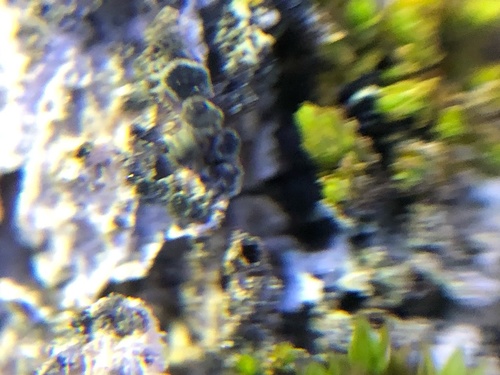
rinodina lichen
Rinodina colobina
Photo: iNaturalist: (c) haarala, some rights reserved (CC BY-NC)
Overview
Rinodina colobina is a species of corticolous (bark-dwelling) crustose lichen in the family Physciaceae. It has a dark grey, granular appearance and typically grows on nutrient-rich bark of deciduous trees, including elm, maple, and oak. The lichen is characterised by small black reproductive structures (apothecia) surrounded by a grey margin. It is widely distributed across Europe and North America, favouring areas with consistently high humidity levels.
Rinodina colobina, a crustose lichen species, faces severe decline primarily due to air pollution and habitat degradation in its specialized coastal environments. The species is particularly vulnerable to sulfur dioxide emissions and other atmospheric pollutants that directly impact lichen physiology, combined with coastal development pressures that destroy its substrate habitats.
Habitat
Rinodina colobina typically grows as an epiphyte, primarily on the bark of trees (corticolous). It prefers nutrient-rich or eutrophic bark, particularly that of deciduous trees, although it occasionally colonises wood or lignin substrates. Its most common host trees include species of elm (Ulmus), poplar (Populus), maple (Acer), ash (Fraxinus), and oak (Quercus). In Greece, it can use Melia...
Other threatened species in Physciaceae
Threatened in Algeria


Frequently asked questions
Why is rinodina lichen classified as Endangered?
Where does rinodina lichen live?
What are the main threats to rinodina lichen?
Get weekly conservation intelligence
One short digest a week of the most striking species and country data we ship, plus breaking conservation news paired with our database where it matters.
Free, no spam. One-click unsubscribe in every email.