
Alborn Skink
Oligosoma albornense
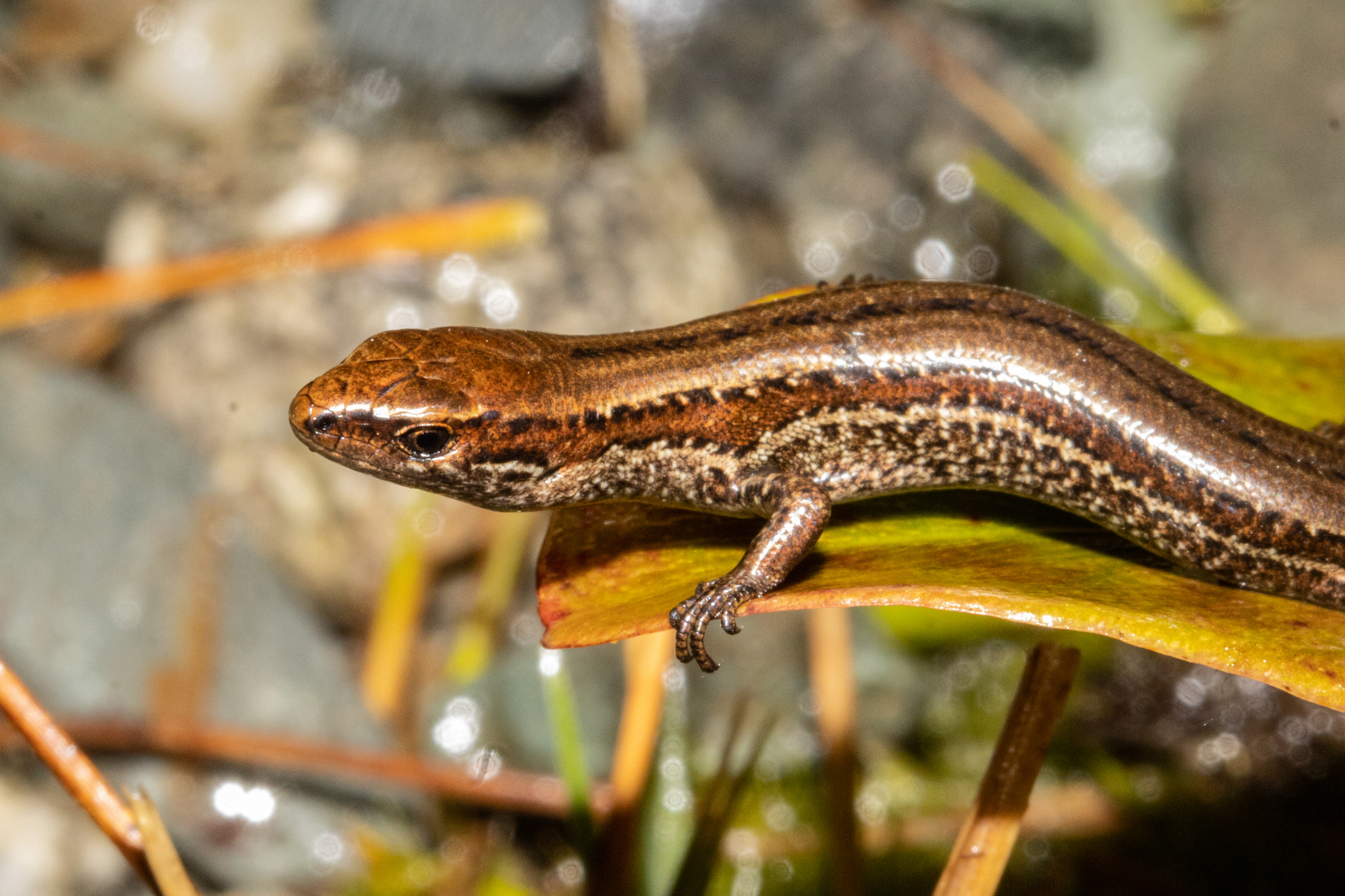
Photo: Photo: Wikimedia Commons, CC BY-SA
Overview
Oligosoma albornense is a critically endangered skink endemic to New Zealand's South Island, specifically restricted to the Alborn Valley region of Canterbury. This medium-sized lizard displays the characteristic elongated body and smooth, overlapping scales typical of New Zealand skinks, with a bronze-brown dorsal coloration marked by darker longitudinal stripes and a lighter ventral surface. The species inhabits rocky outcrops, scree slopes, and tussock grasslands at elevations between 800-1,200 meters, where it shelters beneath rocks and in crevices during cooler periods.
Like other New Zealand skinks, O. albornense is viviparous, giving birth to live young rather than laying eggs, and feeds primarily on small invertebrates including spiders, beetles, and moths. The species exhibits typical skink behavior, being most active during warm, sunny conditions when it emerges to bask and forage.
Its extremely restricted range makes it one of New Zealand's most geographically limited reptiles, with the entire known population confined to an area of less than 10 square kilometers. The International Union for Conservation of Nature classifies this species as Critically Endangered due to its tiny range, small population size, and ongoing habitat degradation. Recent conservation efforts have included habitat protection measures and monitoring programs, with researchers working to better understand the species' ecology and population dynamics.
The establishment of predator control programs in the Alborn Valley has shown promising results for protecting remaining individuals from introduced mammalian predators.
The primary threats to Oligosoma albornense stem from its extremely restricted distribution, making the entire species vulnerable to single catastrophic events. Introduced mammalian predators, particularly stoats, rats, and feral cats, pose a significant threat to both adults and juveniles in their rocky habitat refugia. Habitat modification from livestock grazing and recreational activities has degraded the quality of tussock grassland areas essential for foraging, while climate change threatens to alter the specific temperature and moisture conditions required for this high-altitude specialist.
Habitat
Oligosoma albornense occupies alpine and subalpine environments characterized by rocky outcrops, scree slopes, and adjacent tussock grasslands in the Alborn Valley of Canterbury, South Island. The species requires areas with abundant rock crevices and loose stone for shelter, combined with open grassland areas that provide foraging opportunities for invertebrate prey.
Conservation measures underway
Other threatened species in SCINCIDAE

Threatened in New Zealand
Frequently asked questions
Why is Alborn Skink classified as Critically Endangered?
Where does Alborn Skink live?
What are the main threats to Alborn Skink?
Get weekly conservation intelligence
One short digest a week of the most striking species and country data we ship, plus breaking conservation news paired with our database where it matters.
Free, no spam. One-click unsubscribe in every email.