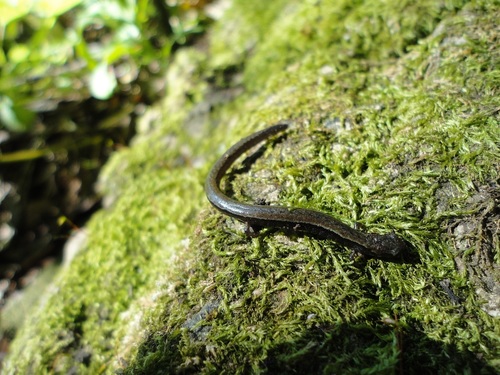
Acultzingo Pigmy Salamander
Thorius dubitus
Photo: Photo: (c) nestor vasquez, all rights reserved, uploaded by nestor vasquez
Overview
Thorius dubitus, commonly known as the Acultzingo pigmy salamander, is a species of salamander in the family Plethodontidae. It is endemic to Mexico where it is found in the Sierra Madre de Oaxaca of west-central Veracruz and adjacent Puebla.
The Acultzingo Pigmy Salamander faces severe range restriction, being known only from a small area near Acultzingo, Veracruz, which leaves it highly vulnerable to localized habitat disturbance. Deforestation for agriculture and logging within its cloud forest and pine-oak forest habitat has reduced the moist microhabitats this lungless, skin-breathing species requires. Its dependence on consistent humidity and cool temperatures also makes it acutely sensitive to regional climate shifts, which are drying out remaining forest fragments and compounding population declines.
Habitat
Thorius dubitus inhabits the understory of montane cloud forests in Mexico's Sierra Madre Oriental, specifically within the leaf litter, moss, and decaying wood of these perpetually moist ecosystems. The species requires the stable microclimate conditions found between 2,200-2,800 meters elevation, where persistent fog maintains the high humidity levels essential for cutaneous respiration.
Conservation measures underway
Other threatened species in PLETHODONTIDAE


Threatened in Mexico
Frequently asked questions
Why is Acultzingo Pigmy Salamander classified as Critically Endangered?
Where does Acultzingo Pigmy Salamander live?
What are the main threats to Acultzingo Pigmy Salamander?
Get weekly conservation intelligence
One short digest a week of the most striking species and country data we ship, plus breaking conservation news paired with our database where it matters.
Free, no spam. One-click unsubscribe in every email.