Saiga: Prince William Praises Kazakh Revival
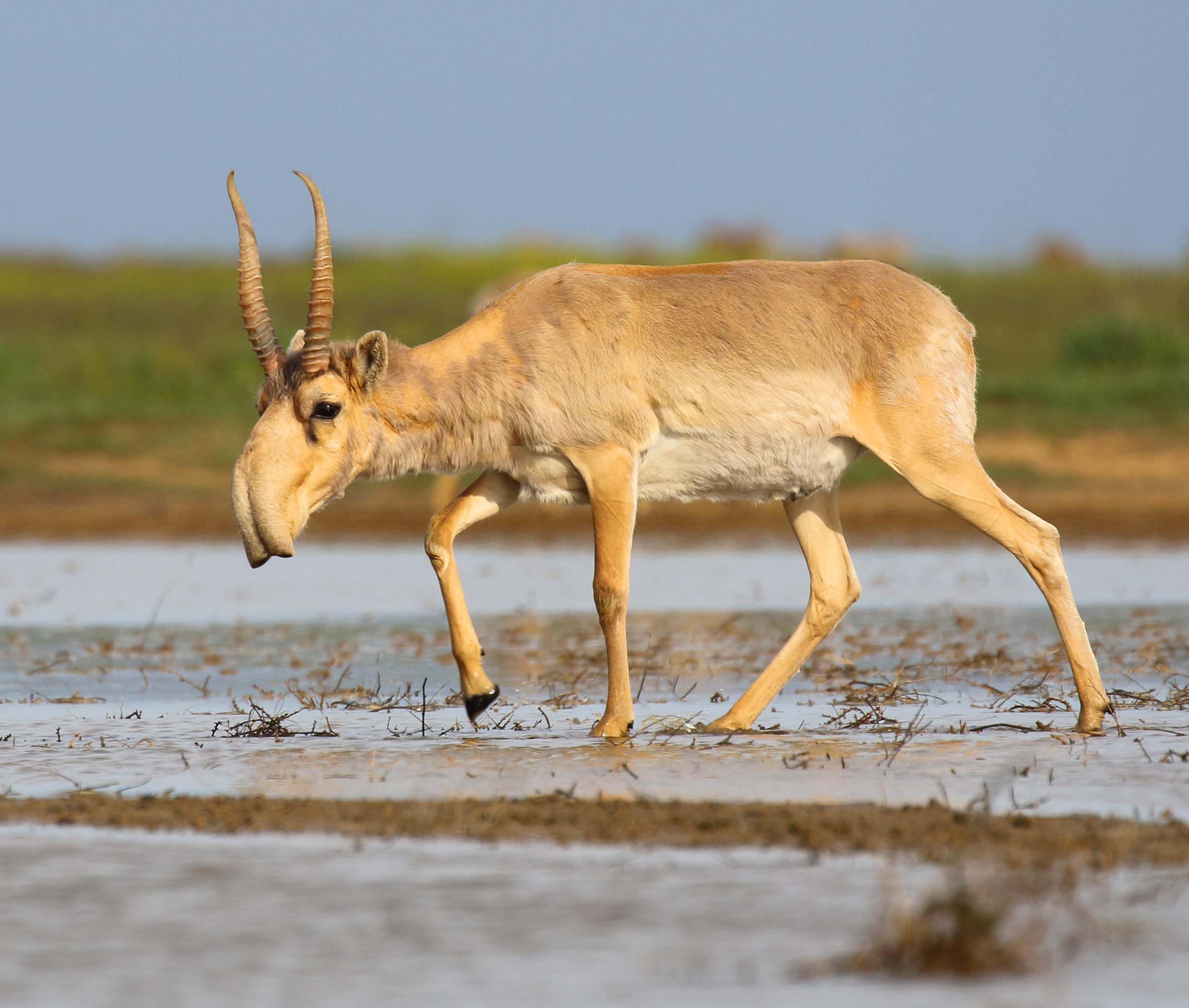
A royal shoutout for a steppe survivor
The saiga antelope, one of the world's most imperiled grazers, received an unexpected moment of global attention this week when Britain's Prince William spoke approvingly of Kazakhstan's saiga recovery on a British television programme. According to Tengri News, the prince referenced the country's Altyn Dala conservation initiative while discussing wildlife success stories, putting a notoriously under-the-radar species briefly in the spotlight of mainstream entertainment television.
The timing is notable. Kazakhstan's spring 2026 aerial survey put the national saiga count at approximately 4.69 million animals, a figure that conservationists have cited as evidence that one of the most dramatic ungulate recoveries in modern conservation history continues to hold. That number represents the bulk of the global population of the species, which remains listed as Critically Endangered on the IUCN Red List despite the rebound in Kazakh herds.

What this means for the species' status
It would be easy to read a headline like "4.69 million saiga" and assume the species has turned a corner entirely. The reality is more layered. The IUCN classification of Critically Endangered reflects not just a raw headcount but a pattern of volatility: saiga populations have a documented history of collapsing by 80 percent or more within a single season due to disease outbreaks, as happened with the mass die-off events that killed hundreds of thousands of animals in Kazakhstan in past years. A large population today does not guarantee stability tomorrow.
What the Kazakh figures do represent is a genuine recovery trajectory from historic lows, driven by sustained anti-poaching enforcement, habitat protection across the Altyn Dala ("Golden Steppe") landscape, and cross-border cooperation on migratory corridors. Conservation groups involved in that programme, including the Association for the Conservation of Biodiversity of Kazakhstan, have worked for roughly two decades to rebuild numbers that once dipped to the tens of thousands following the collapse of Soviet-era hunting controls in the 1990s. The species profile on SpeciesRadar's own saiga page tracks this history in detail, underscoring how dramatically the population has fluctuated even within living memory.
Why a royal mention matters
Public figures referencing lesser-known species on popular television can have outsized effects on awareness, even if the mention is brief. The saiga, with its distinctive bulbous nose and prehistoric lineage dating to the Pleistocene mammoth steppe, has historically struggled for the kind of public recognition afforded to pandas, tigers, or elephants. A mention on a British talk show, paired with specific reference to Kazakhstan's conservation programme, offers a rare moment of visibility for a species whose fate is tied to places most viewers will never visit: the Ustyurt Plateau, Betpak-Dala, and the Ural steppe.
The wider conservation picture
The saiga's range tells its own story of loss and fragmentation. The species once roamed a vast swath of Eurasian grassland stretching from the Carpathians to Mongolia, and during the Pleistocene its range extended as far as the British Isles. Today, the dominant subspecies survives only in scattered pockets:
- Kalmykia and Astrakhan Oblast in Russia, where numbers remain comparatively low
- The Ural Mountains, Ustyurt Plateau, and Betpak-Dala regions of Kazakhstan, now home to the vast majority of the global population
- Seasonal migratory ranges extending into Uzbekistan, and occasionally Turkmenistan, during winter months
- Western Mongolia, where a distinct subspecies persists in much smaller numbers
The species is regionally extinct in Romania, Ukraine, Moldova, China, and southwestern Mongolia, a reminder of how much ground has already been permanently lost. The core threats keeping the saiga on the Critically Endangered list remain illegal hunting, chiefly for horns used in traditional medicine markets, alongside habitat degradation from agricultural expansion and infrastructure development. Climate change is adding new pressure by altering the grassland ecosystems the species depends on for forage and migration, while recurring disease outbreaks, including pasteurellosis events linked to unusual weather conditions, have caused some of the most severe mass mortality episodes recorded in any large mammal in recent decades.
Looking ahead
Conservationists tend to treat each new survey with cautious optimism rather than celebration. The Altyn Dala landscape approach, which links protected areas across huge stretches of steppe to preserve migratory routes, is widely credited with Kazakhstan's recovery, but experts continue to stress that sustained funding, enforcement, and disease monitoring are essential to prevent backsliding. International attention, even from a royal television appearance, can help sustain the political and financial support such programmes require to continue operating across such remote and logistically difficult terrain. Explore the full profile and conservation data for Saiga (CR) on SpeciesRadar.
Frequently Asked Questions
Why is the saiga still Critically Endangered if there are millions of them?
Population size alone does not determine Red List status. The saiga's history of sudden, catastrophic die-offs from disease and poaching means the species remains highly vulnerable despite large current numbers, which is why it retains the Critically Endangered classification.
What is the Altyn Dala Conservation Initiative?
It is a long-running Kazakh-led programme that protects and connects steppe habitats to safeguard saiga migration routes, combining anti-poaching patrols, habitat protection, and scientific monitoring across the country's grasslands.
Where do saiga live today?
Surviving populations are concentrated in Kazakhstan's Ural, Ustyurt, and Betpak-Dala regions, with smaller numbers in Russia's Kalmykia and Astrakhan Oblast, seasonal migrants reaching Uzbekistan, and a separate subspecies in western Mongolia.
What are the biggest threats to saiga survival?
Illegal hunting for horns, habitat loss from agriculture and development, climate-driven changes to grassland ecosystems, and periodic disease outbreaks are the primary pressures documented for the species.
Get weekly conservation intelligence
One short digest a week of the most striking species and country data we ship, plus breaking conservation news paired with our database where it matters.
Free, no spam. One-click unsubscribe in every email.