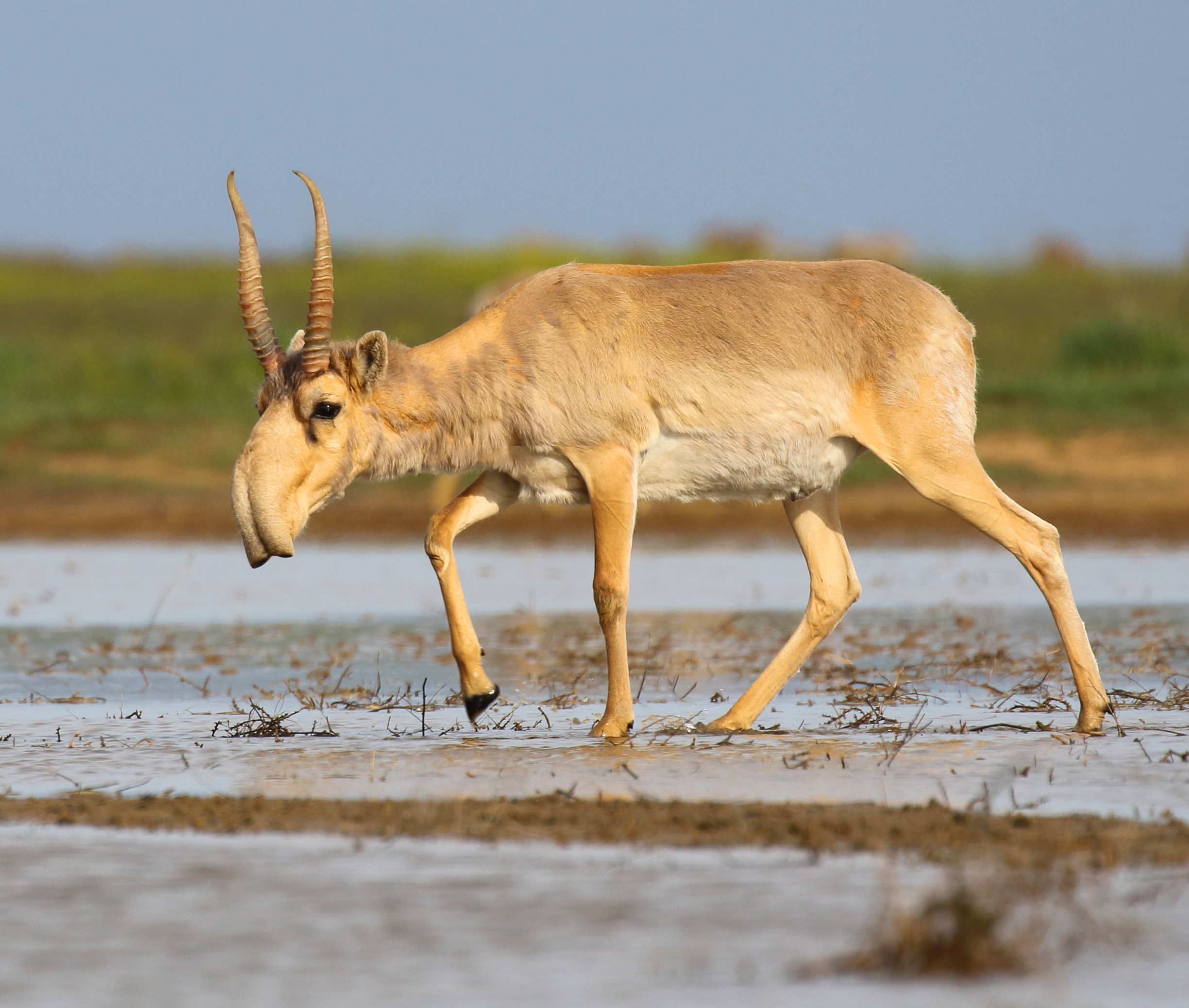
Saiga
Saiga tatarica
Photo: Photo: Wikimedia Commons, CC BY-SA
Overview
A detailed profile for this species is sourced from the IUCN Red List of Threatened Species as assessments become available.
The Saiga faces severe threats from illegal hunting for its horns, which are highly valued in traditional medicine, leading to dramatic population declines. Habitat loss from agricultural expansion and infrastructure development, combined with climate change impacts on grassland ecosystems, further threaten remaining populations. Disease outbreaks have also caused catastrophic mortality events in recent years.
Habitat
Semi-arid grasslands, steppes, and semi-deserts of Central Asia, including open plains and rolling hills with sparse vegetation. The species migrates seasonally between summer and winter ranges across these vast grassland ecosystems.
Frequently asked questions
Why is Saiga classified as Critically Endangered?
Where does Saiga live?
What are the main threats to Saiga?
Get weekly conservation intelligence
One short digest a week of the most striking species and country data we ship, plus breaking conservation news paired with our database where it matters.
Free, no spam. One-click unsubscribe in every email.