Saiga: William Hails Kazakhstan's Comeback
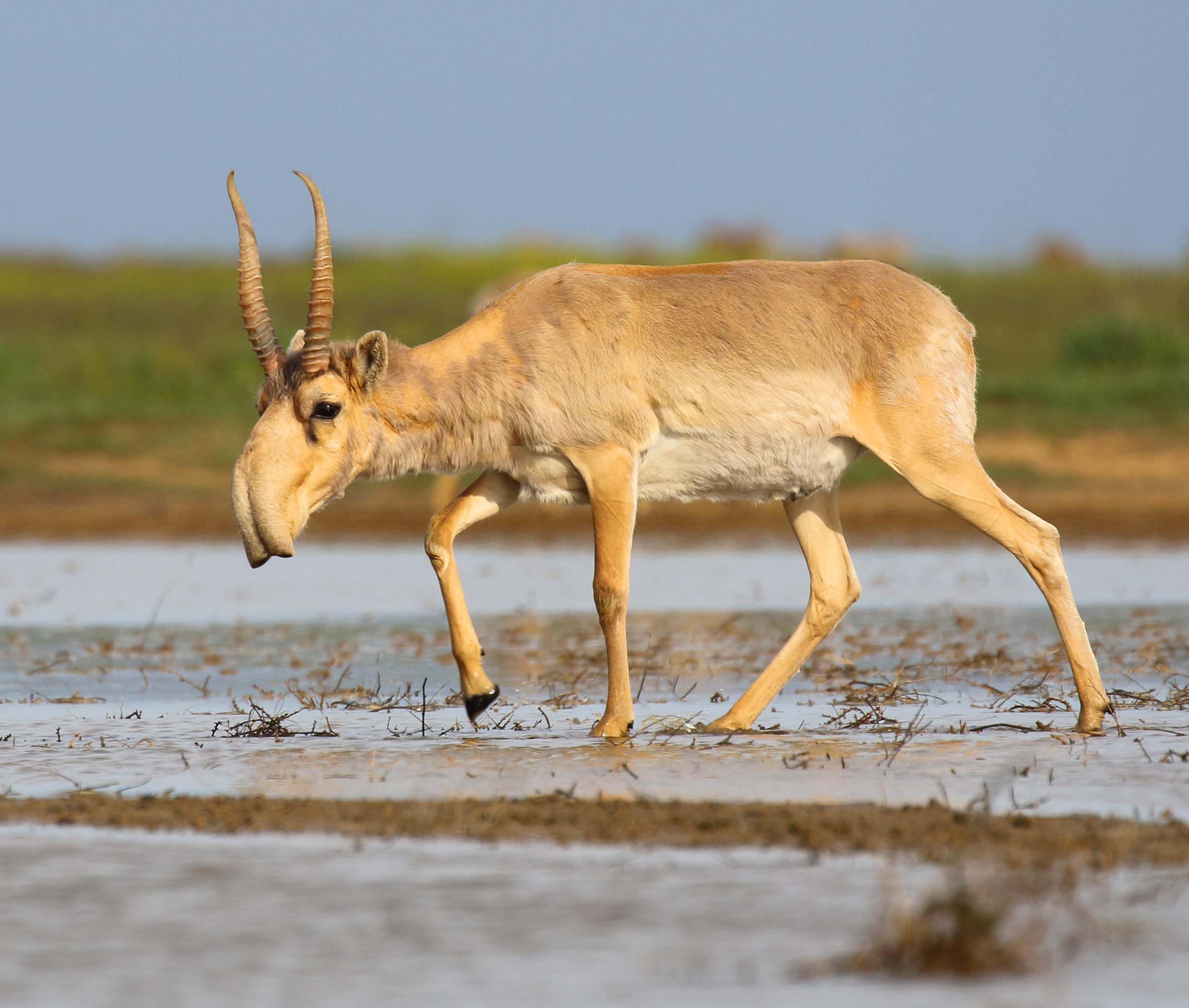
A Royal Spotlight on the Steppe
Prince William has publicly praised Kazakhstan's turnaround in saiga antelope conservation, citing the species' recovery from near collapse as one of the more remarkable comeback stories in modern wildlife management. Speaking during a BBC appearance, William pointed to the Altyn Dala Conservation Initiative as a model partnership between government agencies and conservation groups, crediting it with reversing decades of decline across Kazakhstan's vast central steppe.
The numbers behind that praise are striking. According to the account relayed on Qazinform, the saiga population in the region has climbed from roughly 40,000 animals two decades ago to more than four million today — a hundredfold increase that few large mammal recoveries anywhere in the world can match. Yet the species as a whole, tracked globally as Saiga tatarica, remains classified as Critically Endangered on the IUCN Red List, a reminder that even extraordinary regional rebounds don't automatically erase a species' precarious global standing.

What This Status Actually Means
The saiga's story is unusual because it pulls in two directions at once. On one hand, Kazakhstan's population surge represents one of the fastest ungulate recoveries ever documented, driven by sustained anti-poaching patrols, habitat protection across the Betpak-Dala, Ustyurt and Ural populations, and cross-agency coordination that the Altyn Dala partnership has institutionalized over nearly 20 years. On the other hand, the Critically Endangered designation persists because the species' history is marked by sudden, catastrophic reversals.
That volatility is not hypothetical. Saiga populations have been hit by mass die-off events linked to disease outbreaks that killed hundreds of thousands of animals within days in some past episodes, a vulnerability tied to the species' tendency to gather in dense herds during calving season. A single bacterial event can undo years of population growth almost overnight. The Red List category reflects this boom-and-bust biology as much as it reflects current headcounts — a species can be numerous in a given year and still be considered at serious long-term risk because of how fragile that abundance can prove to be.
Poaching pressure also hasn't disappeared. Saiga horn remains sought after in traditional medicine markets, and the economic incentive to hunt males for their horns continues to shape management strategy, since horn-only hunting also skews herd sex ratios and can undermine breeding success even when overall numbers look healthy.
The Wider Conservation Picture
Historically, saiga roamed an enormous range stretching from the Carpathian foothills through the Caucasus into Mongolia and Dzungaria, with Ice Age populations once reaching from the British Isles to Beringia. That range has contracted dramatically. The species is now regionally extinct in Romania, Ukraine, Moldova, China and southwestern Mongolia, surviving today mainly in:
- Kalmykia and Astrakhan Oblast in Russia
- The Ural Mountains, Ustyurt Plateau and Betpak-Dala regions of Kazakhstan
- A seasonal migratory population that moves into Uzbekistan, and occasionally Turkmenistan, during winter
- A genetically distinct subspecies confined to western Mongolia
Kazakhstan's success is therefore disproportionately important to the species' global future, since it now holds the overwhelming majority of the world's saiga. That concentration is both the source of the recovery's scale and a structural risk: a disease outbreak or poaching surge in one Kazakh population cluster could have outsized consequences for the species worldwide, given how few other strongholds remain.

Why Experts Still Urge Caution
Conservation scientists tracking the species generally note that rapid numeric recovery doesn't equate to resilience. Genetic diversity, habitat connectivity across international borders, and disease surveillance capacity all factor into whether a four-million-strong population can be sustained for decades rather than collapsing again. The Altyn Dala model, which combines ranger patrols, satellite monitoring of migratory corridors and community engagement, is frequently cited as the kind of long-horizon investment required to convert a population spike into durable stability.
Outlook
The royal endorsement brings international attention to a conservation partnership that has largely operated outside the global spotlight, and that visibility could help unlock further funding or cross-border cooperation with Russia and Uzbekistan, where saiga populations also migrate and breed. Kazakhstan's wildlife authorities have signaled intent to maintain patrol funding and habitat protections, but sustaining momentum will likely depend on continued investment in disease monitoring and anti-poaching enforcement rather than treating the population milestone as a finished success.
For now, the saiga stands as a case study in how numbers alone can mislead: a species can surge from the edge of collapse to millions of individuals while still carrying a Critically Endangered label, because true recovery is measured not just in headcounts but in stability across generations.
Methodology note: Species classification and range data referenced in this article are drawn from SpeciesRadar's database, which compiles IUCN Red List assessments and national range information for Saiga tatarica, cross-referenced with reporting from Qazinform.
Frequently Asked Questions
Why is the saiga still Critically Endangered if its population grew so much?
The IUCN Red List category accounts for long-term volatility, not just current numbers. Saiga have suffered sudden mass die-offs from disease in the past, and poaching pressure persists, so the species is still considered at high extinction risk despite the recent surge.
What is the Altyn Dala Conservation Initiative?
It's a long-running partnership between Kazakh government agencies and conservation organizations focused on protecting saiga habitat, running anti-poaching patrols, and monitoring migratory corridors across the central steppe.
Where do saiga live today?
The core populations are in Kazakhstan's Ural Mountains, Ustyurt Plateau and Betpak-Dala regions, with additional populations in Russia's Kalmykia and Astrakhan Oblast, a seasonal migratory group reaching Uzbekistan, and a separate subspecies in western Mongolia. The species is now extinct in several former range countries including Ukraine, Moldova and China.
What threats do saiga face besides poaching?
Habitat loss from agricultural expansion and infrastructure, climate pressures on steppe grasslands, and periodic disease outbreaks that can cause rapid, large-scale mortality remain the species' most significant ongoing threats.
Get weekly conservation intelligence
One short digest a week of the most striking species and country data we ship, plus breaking conservation news paired with our database where it matters.
Free, no spam. One-click unsubscribe in every email.